Roof Deck Spray Foam Insulation in Watsonville, CA
Watsonville Spray Foam Insulation provides roof-deck spray foam insulation for appropriate Watsonville attic and roof assemblies after the roofing condition, moisture strategy, ventilation design, foam product, and code requirements are evaluated. We bring 10+ Years of Experience and are Insured, serving Watsonville, the Pajaro Valley, and the Central Coast.
Applying spray polyurethane foam at the roof deck changes the attic thermal boundary by moving insulation from the ceiling plane to the underside of the roof sheathing. Roof leaks and damaged roof components must be corrected first, because spray foam is not a roofing repair product and does not fix active leaks. Vented versus unvented attic assembly strategy matters, and foam type is assembly-specific.
Each roof-deck project starts with a roof and attic condition assessment that looks at roofing condition, sheathing, moisture sources, ventilation design, and barrier requirements before any foam is recommended. The fastest way to begin is a call to 831-432-7982, or you can submit the five-field form on this page with your project address.
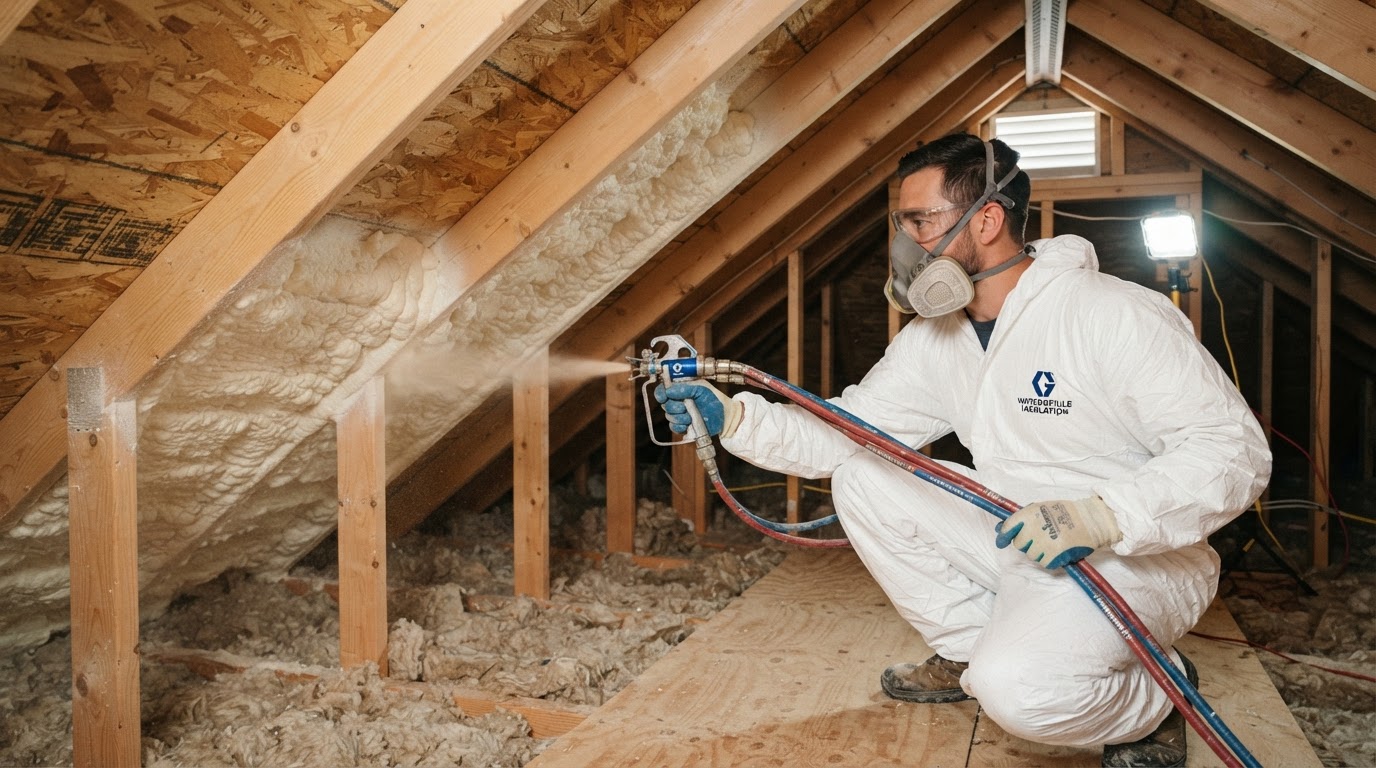
Request a Roof Deck Spray Foam Estimate
Tell us about your property and the insulation work you need. Include your project address so we can determine serviceability in Watsonville and the Central Coast. We review each request and reach out to discuss scope, materials, and next steps.
- Five-field request form — no unnecessary fields
- SMS consent is optional and never required to request an estimate
- Project-specific pricing after scope evaluation
Request My Estimate
Request your free spray foam insulation estimate. 10+ Years of Experience • Insured.
Why Watsonville Property Owners Choose Watsonville Spray Foam Insulation for Roof Deck Spray Foam
Watsonville Spray Foam Insulation brings 10+ Years of Experience and is Insured, serving Watsonville, the Pajaro Valley, and the Central Coast with assembly-specific spray foam and insulation work.
Our Roof Deck Spray Foam Services
Existing Attic Roof-Deck Insulation
Existing attic roof-deck insulation applies spray foam to the underside of the roof sheathing in Watsonville homes where a retrofit is appropriate. Roofing condition, sheathing integrity, moisture sources, and the existing ventilation strategy are assessed before any foam is recommended.
Open-cell or closed-cell foam is applied to the roof-deck substrate with material and thickness selected for the assembly and applicable code. Active roof leaks are corrected first, because spray foam does not repair active roofing or bulk-water problems.
Property owners gain insulation at the roof deck that moves the thermal boundary to the roof line, supporting thermal continuity and air-sealing for the assembly when correctly specified.
Remodel and Addition Roof Assemblies
Remodel and addition roof assemblies apply spray foam to the roof deck where framing is accessible during a renovation project in Watsonville homes. Sequencing insulation while the roof framing is exposed avoids the access limitations of retrofit work.
Foam is applied to the roof-deck substrate with coordination around roofing condition, ventilation design, and the construction schedule. Material and thickness are selected for the assembly, with barrier requirements addressed per applicable code.
Property owners gain roof-deck insulation integrated into the remodeled or added roof assembly, supporting thermal continuity and air-sealing from the start of the project.
New Construction Roof-Deck Assemblies
New construction roof-deck assemblies apply spray foam to the underside of the roof sheathing in Watsonville new builds where the framing is open. Coordination with framing, rough-in, inspections, and the ventilation or unvented-assembly design is planned before installation.
Foam type and installed thickness are selected for the roof assembly based on rafter depth, vapor strategy, and applicable code. The installation is sequenced so the roof deck is ready for any required barrier or finish before the next construction phase.
Property owners gain a roof-deck insulation strategy planned with the new construction schedule, supporting the building envelope from the roof line rather than as a retrofit.
Open-Cell and Closed-Cell Roof-Deck Options
Open-cell and closed-cell roof-deck options are selected based on the roof assembly, rafter depth, vapor strategy, and applicable code. Open-cell is lower-density and expands to fill cavities, while closed-cell is denser and typically provides higher R-value per inch.
Foam type and thickness are chosen for the specific roof deck, with vapor performance evaluated for the installed product and assembly. Neither material is universally better, and the choice depends on the roof design and moisture strategy.
Property owners gain an assembly-specific roof-deck insulation choice, with vapor performance and barrier requirements tied to the actual product and installation rather than assumed.
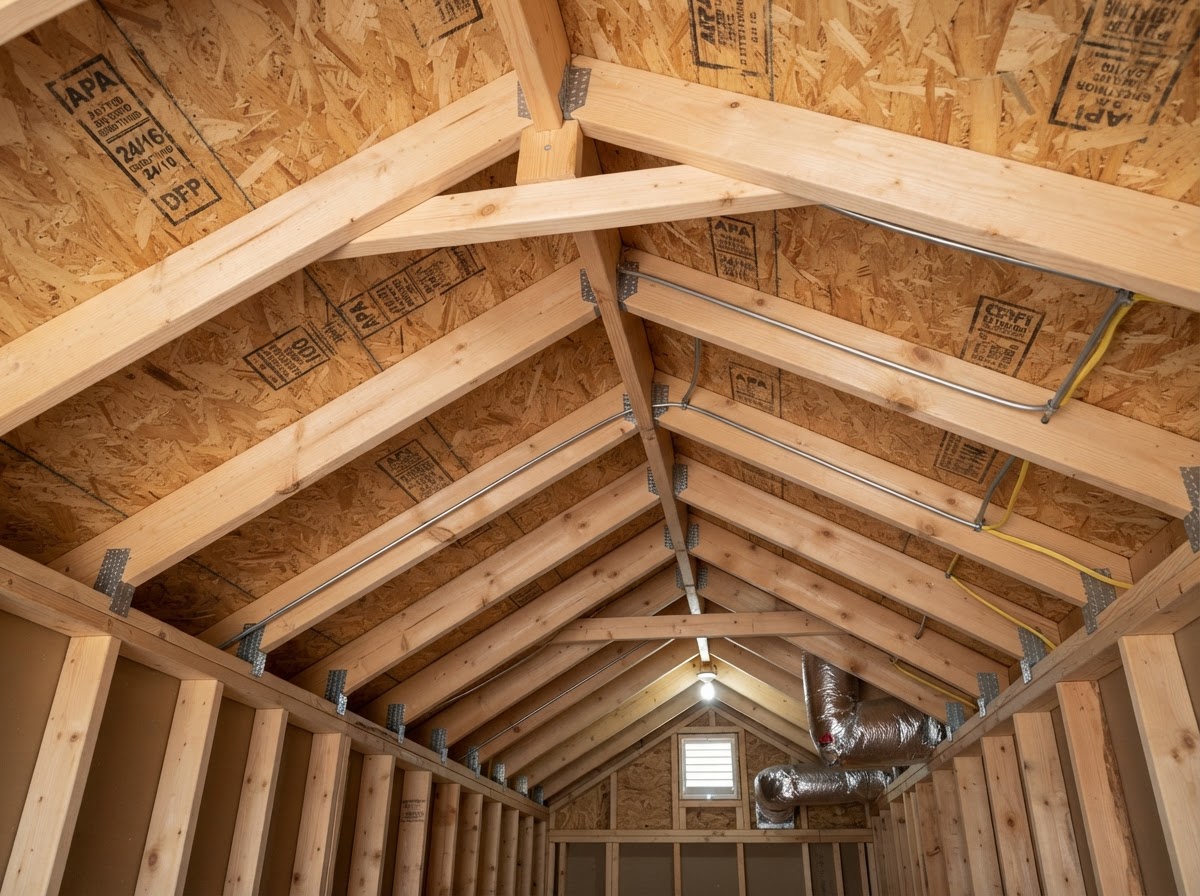
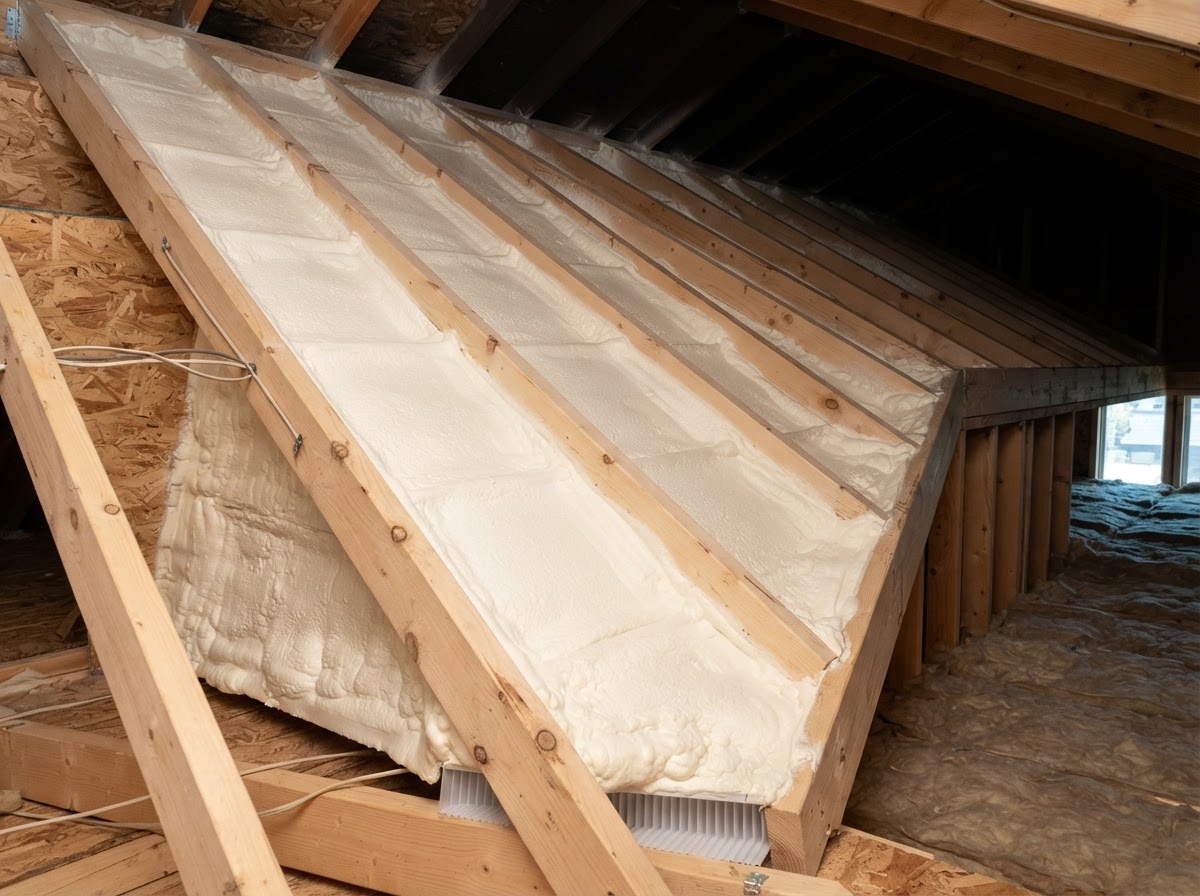
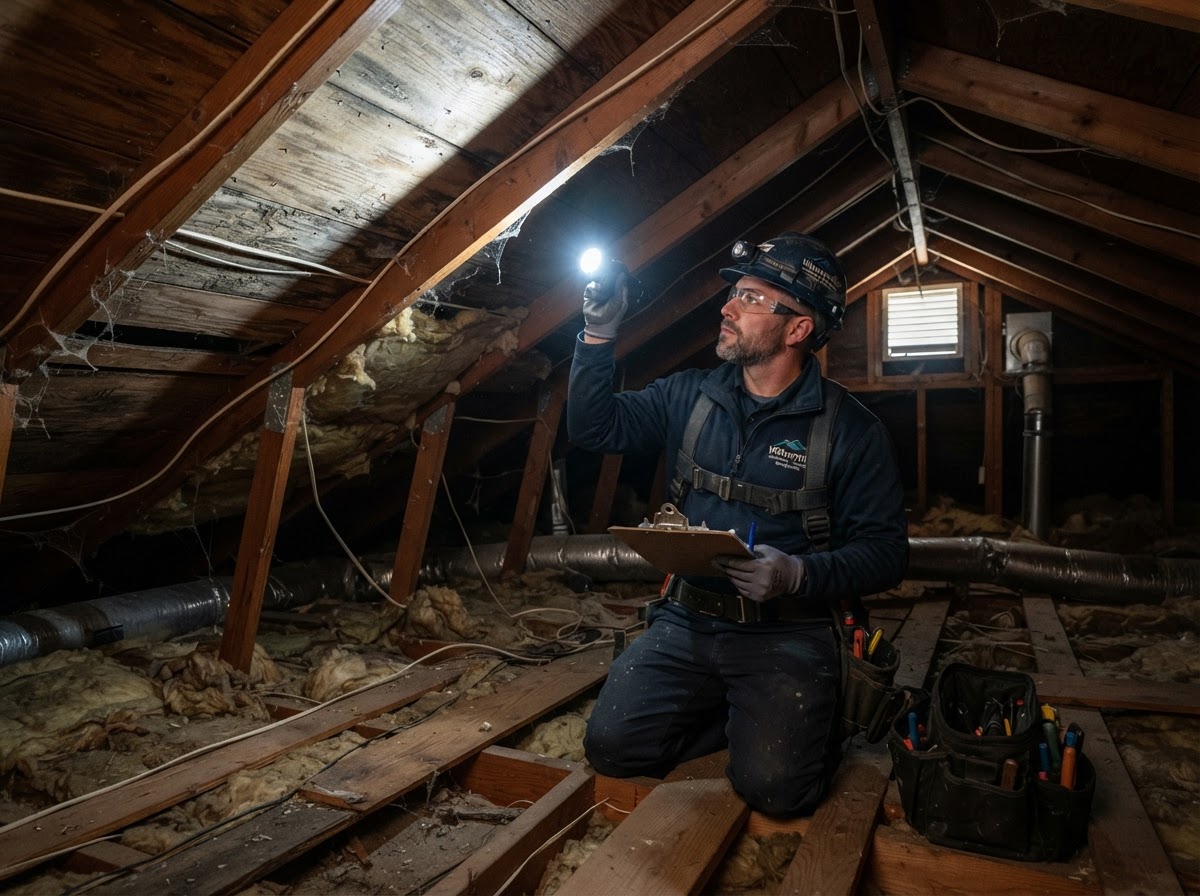
What Problems Can Roof Deck Spray Foam Address?
Air Leakage at the Roof-Line Thermal Boundary
Air leakage at the roof-line thermal boundary can undermine attic performance. Roof-deck spray foam can form an air-sealing layer at the underside of the sheathing, but the leakage source and roofing condition should be evaluated before a material is prescribed.
Complex Rafter and Roof Geometry
Complex rafter spacing, hips, valleys, and irregular roof geometry can leave gaps with conventional insulation. Spray foam conforms to the roof deck and framing, which can suit difficult geometry where access is available.
Incomplete Insulation in Appropriate Roof Assemblies
Incomplete or missing insulation in an appropriate roof-deck assembly can be addressed with spray foam where the assembly allows. The roof-deck strategy is evaluated for the actual roof, because not every attic is best served by a roof-deck approach.
What Are the Signs a Watsonville Property May Need Roof Deck Spray Foam?
Roof Leaks and Sheathing Condition
Roof leaks and sheathing condition must be checked before roof-deck spray foam is installed. Active leaks, damaged sheathing, and bulk-water entry must be diagnosed and corrected first, because spray foam does not repair active roofing problems and concealing a leak does not fix it.
Ventilation or Unvented-Assembly Strategy
The ventilation or unvented-assembly strategy must be checked before roof-deck spray foam is installed. Applying foam at the roof deck changes the attic thermal boundary, so vented versus unvented design is evaluated against the roof, moisture strategy, and applicable code.
Foam Type, Vapor Strategy and Barrier Requirements
Foam type, vapor strategy, and barrier requirements must be checked before roof-deck spray foam is installed. Open-cell and closed-cell have different vapor characteristics, and thermal or ignition barrier requirements depend on foam location, the listed product, and applicable code.
How Our Roof Deck Spray Foam Process Works
Roof and Attic Condition Assessment
We assess roofing condition, sheathing, moisture sources, ventilation design, rafter depth, access, and your project goals. This informs whether a roof-deck approach is correct and which foam fits the assembly.
Assembly and Foam Planning
We clarify the open-cell versus closed-cell choice, installed thickness, roof geometry, barrier requirements, and the vented or unvented strategy. The estimate reflects these drivers so you understand what moves the price.
Preparation and Occupant Planning
Preparation includes isolating and protecting the work area, securing attic access, and coordinating occupants and pets. Product-specific ventilation and re-entry planning follows manufacturer requirements, not a universal hour count.
Professional Application
Professional application covers the roof-deck substrate and rafters with spray polyurethane foam, conforming to the assembly, with coverage and trimming as part of quality control. We do not publish equipment settings or chemical-mixing steps.
Quality Review, Ventilation and Finish/Inspection Coordination
We review visual coverage and assembly condition, clean the work area, and follow manufacturer-specific curing and ventilation procedures. We coordinate with any required barrier, finish, or inspection so the roof assembly is ready for the next phase.
Last updated: September 8, 2026
How Much Does Roof Deck Spray Foam Cost in Watsonville?
Roof-deck spray foam insulation in Watsonville is commonly priced by board foot, with the total depending on foam type, installed thickness, roof geometry, rafter depth, total deck area, access, existing insulation or removal, and the building assembly.
Open-Cell Spray Foam Pricing
Open-cell spray foam: approximately $0.60–$1.60 per board foot
Notes: planning range only; actual pricing depends on product, thickness, total deck area, access, prep, and roof geometry.
Closed-Cell Spray Foam Pricing
Closed-cell spray foam: approximately $1.30–$3.10 per board foot
Notes: planning range only; higher density and project-specific installed thickness influence material and labor requirements.
What Changes the Final Estimate?
- • Foam type (open-cell vs. closed-cell)
- • Roof geometry and rafter depth
- • Specified installed thickness
- • Total roof-deck area
- • Attic access conditions
- • Existing insulation and removal or prep
- • Substrate and sheathing condition
- • Ignition or thermal barrier needs
- • Vented or unvented-assembly strategy
- • Project complexity
One board foot equals one square foot of coverage installed one inch thick. For example, 100 square feet at two inches thick equals 200 board feet.
These ranges are planning tools, not fixed quotes. Roof condition, foam type, installed thickness, access, prep or removal, barriers, and code or assembly requirements can all affect price. We never convert a generic range into a fake whole-project total.
Get a Project-Specific Estimate
Submit your request with your project address and the service you need. We review the scope and provide project-specific pricing after evaluation — not a generic number from a range. Call 831-432-7982 for an immediate conversation.
Request My Estimate
Request your free spray foam insulation estimate. 10+ Years of Experience • Insured.
Roof Deck Spray Foam FAQs for Watsonville
How much does roof deck spray foam cost in Watsonville?
Roof-deck spray foam in Watsonville runs approximately $0.60–$1.60 per board foot for open-cell and $1.30–$3.10 per board foot for closed-cell as planning ranges. Actual price depends on roof geometry, rafter depth, total deck area, access, existing insulation, prep, barriers, and the vented or unvented strategy. We never infer a whole-project total from this range.
Should an attic be insulated at the floor or roof deck?
Whether an attic is insulated at the floor or roof deck depends on the assembly strategy. Attic-floor insulation addresses the ceiling plane in a vented attic, while roof-deck spray foam moves the thermal boundary to the roof line and may create an unvented attic. The correct choice depends on roofing condition, moisture strategy, ventilation, and code requirements.
Can spray foam be installed under a leaking roof?
No, spray foam should not be installed under a leaking roof. Active roof leaks and damaged sheathing must be diagnosed and corrected before roof-deck insulation proceeds, because spray foam is not a roofing repair product and concealing a leak does not fix it.
Is open-cell or closed-cell better at a roof deck?
Neither is universally better at a roof deck. Open-cell is lower-density and expands to fill rafter cavities, while closed-cell is denser and typically provides higher R-value per inch. The correct choice depends on rafter depth, vapor strategy, the roof assembly, and applicable code.
Does roof deck spray foam create an unvented attic?
Roof-deck spray foam can be part of an unvented attic assembly, but whether that strategy applies depends on the roof, moisture strategy, ventilation design, and applicable code. The vented versus unvented decision is evaluated for the specific roof rather than assumed as a default.
Does roof deck spray foam require an ignition or thermal barrier?
Some roof-deck spray foam applications do require an ignition or thermal barrier. The requirement depends on where the foam is installed, occupancy and access, the listed product or system, and applicable building code. We address barrier requirements as part of the scope discussion.
Can occupants remain inside during installation?
Unprotected occupants should not remain in the application area during professional spray polyurethane foam installation. Re-entry and re-occupancy follow product-specific manufacturer instructions and job-site ventilation requirements, not a universal safe-after-X-hours number.
Request Roof Deck Spray Foam in Watsonville
Call 831-432-7982 to talk through your project, or submit the form below with your project address and service request. 10+ Years of Experience and Insured, serving Watsonville and the Central Coast.
Request My Estimate
Request your free spray foam insulation estimate. 10+ Years of Experience • Insured.
Serving Watsonville & the Central Coast