Closed-Cell Spray Foam Insulation in Watsonville, CA
Closed-cell spray foam is a medium-density insulation and air-sealing material that can provide higher R-value per inch than open-cell foam in appropriate Watsonville building assemblies. Watsonville Spray Foam Insulation brings 10+ Years of Experience and is Insured, serving Watsonville, the Pajaro Valley, and the Central Coast.
California Energy Commission modeling defaults include approximately R-5.8 per inch for medium-density closed-cell spray polyurethane foam as a reference only; actual product values vary and manufacturer product data controls. Closed-cell foam offers higher density, air-sealing capability, and assembly-dependent vapor permeance. It is not universally waterproof or universally a vapor barrier, and vapor-retarder behavior depends on foam type, installed thickness, product properties, and the assembly.
Each project starts with an assembly assessment that looks at substrate condition, moisture sources, cavity depth, and barrier requirements before closed-cell foam is recommended. The fastest way to begin is a call to 831-432-7982, or you can submit the five-field form on this page with your project address.
Request a Closed-Cell Spray Foam Estimate
Tell us about your property and the insulation work you need. Include your project address so we can determine serviceability in Watsonville and the Central Coast. We review each request and reach out to discuss scope, materials, and next steps.
- Five-field request form — no unnecessary fields
- SMS consent is optional and never required to request an estimate
- Project-specific pricing after scope evaluation
Request My Estimate
Request your free spray foam insulation estimate. 10+ Years of Experience • Insured.
Why Watsonville Property Owners Choose Watsonville Spray Foam Insulation for Closed-Cell Spray Foam
Watsonville Spray Foam Insulation brings 10+ Years of Experience and is Insured, serving Watsonville, the Pajaro Valley, and the Central Coast with assembly-specific spray foam and insulation work.
Our Closed-Cell Spray Foam Services
Residential Wall and Framing Assemblies
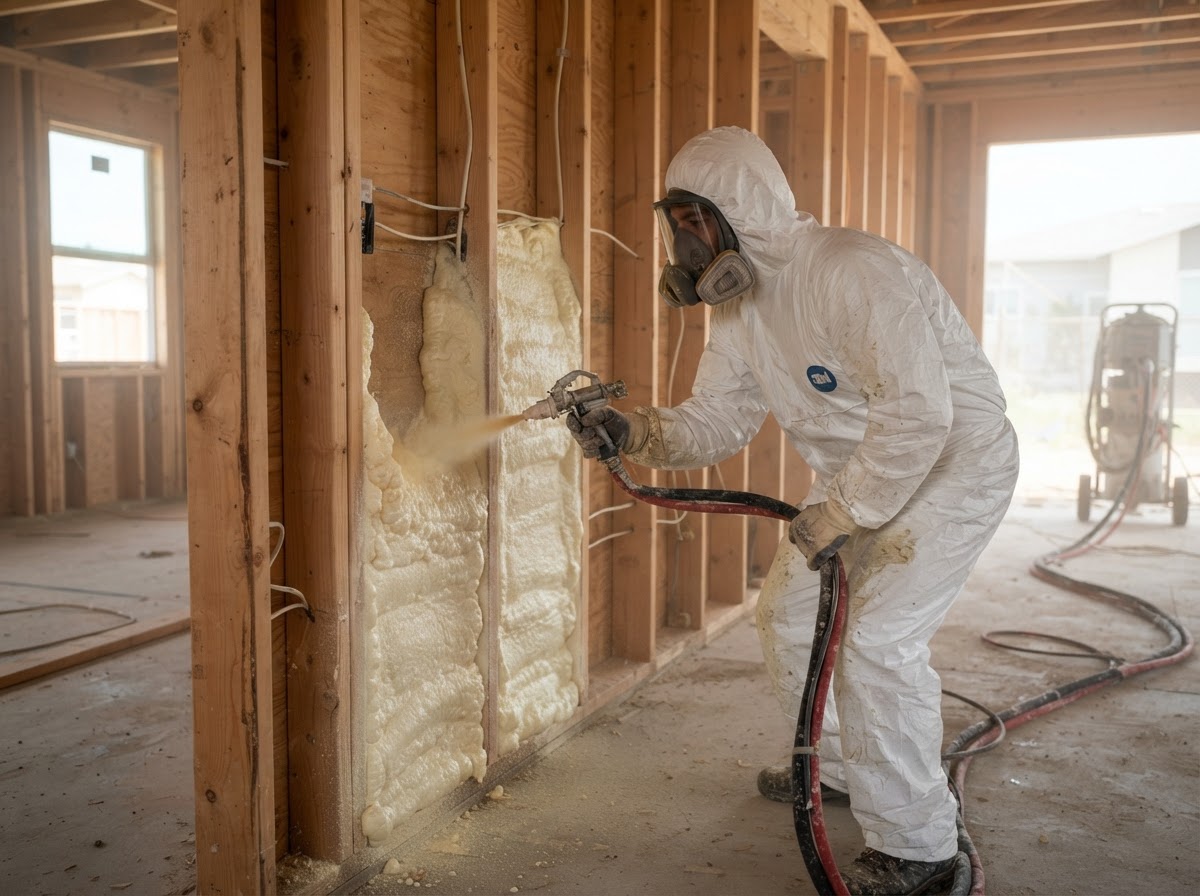
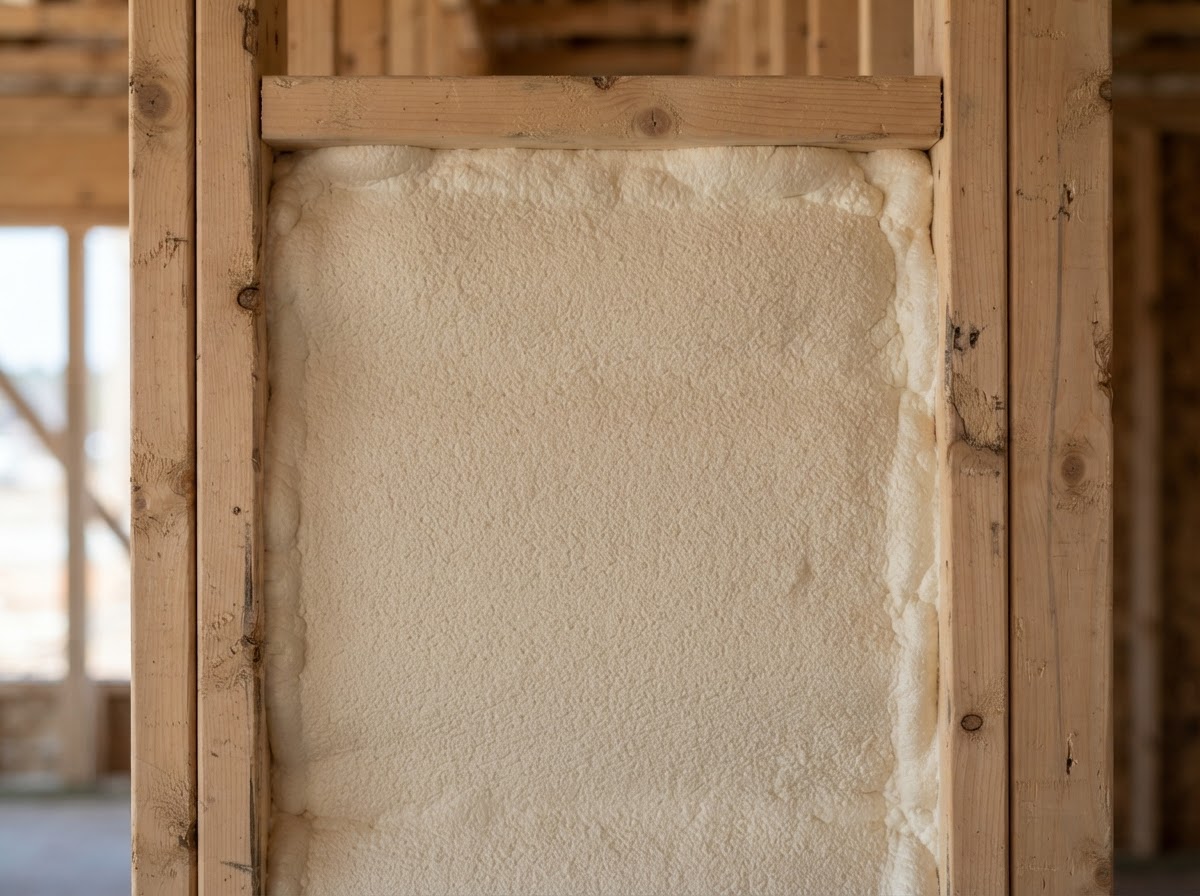
Closed-cell spray foam is used in Watsonville residential wall and framing assemblies where higher density and higher modeled R-value per inch are relevant. It is selected based on cavity depth, assembly requirements, and project goals.
Closed-cell foam is applied with professional equipment to prepared substrates, with installed thickness determined by the assembly and product documentation. Thermal or ignition barrier requirements are evaluated per the listed product and applicable code.
Property owners gain a dense insulation layer with higher modeled R-value per inch than open-cell foam, supporting thermal and moisture-management goals when correctly specified for the assembly.
Roof-Deck and Specialty Assemblies
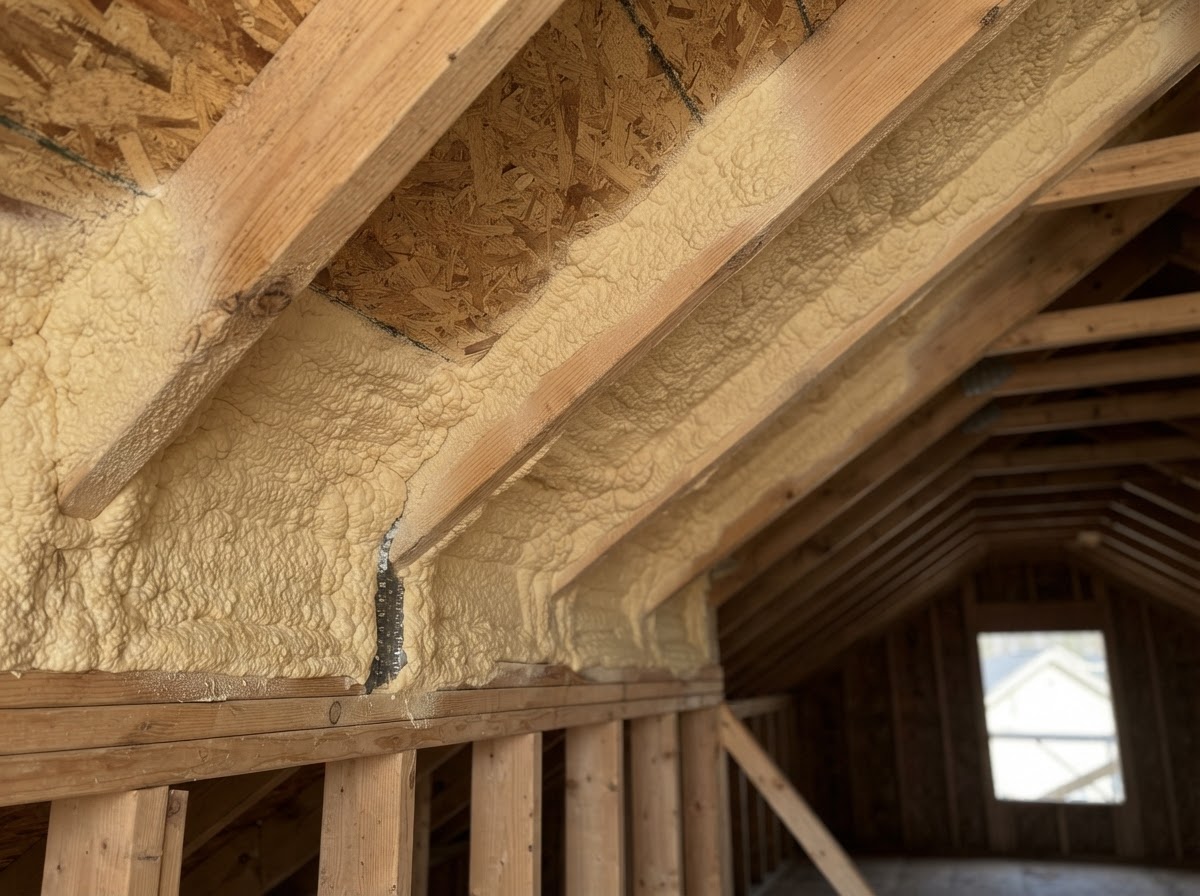
Closed-cell spray foam is used in roof-deck and specialty assemblies where its density and vapor characteristics fit the design. These assemblies require attention to roofing condition, moisture strategy, and ventilation or unvented-assembly requirements.
Closed-cell foam is applied to the roof-deck substrate with material and thickness selected for the assembly and applicable code. Roofing condition and active leaks are evaluated before insulation proceeds, because spray foam does not repair active roof leaks.
Property owners gain insulation at the roof deck that supports thermal continuity and air-sealing, with vapor performance evaluated for the specific product and assembly rather than assumed.
Crawl-Space and Floor Assemblies Where Appropriate
Closed-cell spray foam may be used in crawl-space and floor assemblies where its density and vapor characteristics fit the moisture strategy. Moisture sources must be corrected before insulation proceeds.
Closed-cell foam is applied to floor joists and perimeter areas where appropriate, with attention to substrate condition and the ventilation or conditioning strategy. Vapor-retarder behavior is assembly-dependent and not an automatic vapor barrier.
Property owners gain insulation and air-sealing at a vulnerable part of the building envelope, with vapor performance tied to the specific product and installed thickness.
Metal and Commercial Buildings
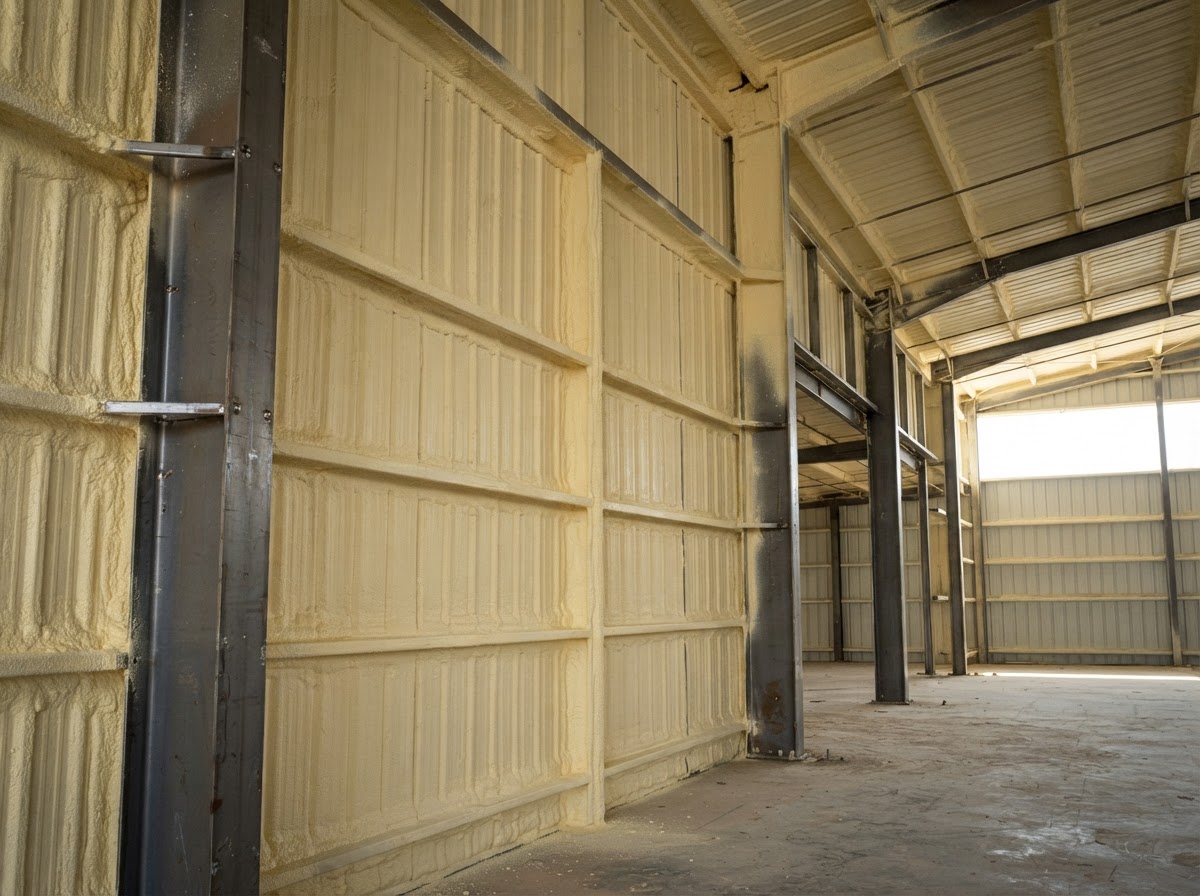
Closed-cell spray foam is used in metal and commercial buildings where condensation control and thermal performance are relevant. Material selection accounts for the metal substrate, building use, and applicable code requirements.
Closed-cell foam is applied to interior steel panels and framing with professional equipment, creating an insulation and condensation-control layer. Thermal bridging context and access are part of the evaluation.
Property owners gain insulation that helps manage condensation on metal panels and supports interior temperature control, relevant to storage, light-commercial, and agricultural metal structures.
What Problems Can Closed-Cell Spray Foam Address?
Higher R-Value per Inch
Closed-cell spray foam provides higher modeled R-value per inch than open-cell foam, which can be relevant where cavity depth is limited. California Energy Commission modeling defaults include approximately R-5.8 per inch for medium-density closed-cell SPF, though actual product values vary and manufacturer product data controls.
Higher Density and Different Material Characteristics
Closed-cell foam is a denser material with different physical characteristics than open-cell foam. Its density suits assemblies where rigidity, moisture strategy, or limited cavity depth are factors, but material selection is assembly-specific rather than universally superior.
Assembly-Specific Vapor Performance
Closed-cell foam's vapor performance is assembly-dependent and depends on foam type, installed thickness, product properties, and the assembly. It is not universally a vapor barrier, and vapor-retarder claims require evaluating the specific product and application.
What Are the Signs a Watsonville Property May Need Closed-Cell Spray Foam?
Moisture and Leak Conditions
Moisture and leak conditions must be checked before closed-cell foam is installed. Active roof, plumbing, or bulk-water sources must be diagnosed and corrected rather than concealed by insulation, because spray foam does not fix active leaks.
Substrate and Assembly Compatibility
Substrate and assembly compatibility must be evaluated before closed-cell foam is installed. The substrate must be prepared so the foam adheres correctly, and the assembly must allow the selected foam type and installed thickness.
Barrier and Code Requirements
Barrier and code requirements must be confirmed before closed-cell foam is installed. Thermal or ignition barrier requirements depend on foam location, occupancy and access, the listed product or system, and applicable building code.
How Our Closed-Cell Spray Foam Process Works
Assembly Assessment
We assess the substrate, moisture sources, cavity depth, access, and your project goals. This informs whether closed-cell foam is the correct material for the assembly.
Product and Thickness Planning
We clarify the closed-cell choice, installed thickness, area, barrier requirements, and access. Lift and application requirements are discussed at a high level without publishing equipment settings or chemical-mixing steps.
Protection and Occupant Planning
Preparation includes isolating and protecting the work area, securing access, and coordinating occupants and pets. Product-specific ventilation and re-entry planning follows manufacturer requirements, not a universal hour count.
Professional Installation
Professional application covers the substrate and assembly with closed-cell spray polyurethane foam, using passes and lifts where product-specific, with cavity and assembly coverage as part of quality control.
Quality Review, Ventilation and Handoff
We review visual coverage and assembly condition, clean the work area, and follow manufacturer-specific curing and ventilation procedures. Re-entry follows product documentation, and we hand off the completed scope with any next steps.
Last updated: September 8, 2026
How Much Does Closed-Cell Spray Foam Cost in Watsonville?
Closed-cell spray foam insulation in Watsonville is commonly priced by board foot, with the total depending on installed thickness, square footage, access, preparation, and the building assembly. Closed-cell is a denser material, which influences material and labor requirements.
Closed-Cell Spray Foam Pricing
Closed-cell spray foam: approximately $1.30–$3.10 per board foot
Notes: planning range only; higher density and project-specific installed thickness influence material and labor requirements.
What Changes the Final Estimate?
- • Specified installed thickness
- • Square footage of the area
- • Substrate condition and preparation
- • Framing and assembly type
- • Access conditions
- • Masking and site protection
- • Ignition or thermal barrier needs
- • Ventilation and re-entry planning
- • Project scale and complexity
- • Commercial equipment and access needs
One board foot equals one square foot of coverage installed one inch thick. For example, 100 square feet at two inches thick equals 200 board feet.
This range is a planning tool, not a fixed quote. Site conditions, installed thickness, access, prep, barriers, and code or assembly requirements can all affect price. We never infer a whole-project total from a generic range.
Get a Project-Specific Estimate
Submit your request with your project address and the service you need. We review the scope and provide project-specific pricing after evaluation — not a generic number from a range. Call 831-432-7982 for an immediate conversation.
Request My Estimate
Request your free spray foam insulation estimate. 10+ Years of Experience • Insured.
Closed-Cell Spray Foam FAQs for Watsonville
How much does closed-cell spray foam cost in Watsonville?
Closed-cell spray foam in Watsonville runs approximately $1.30–$3.10 per board foot as a planning range. Actual price depends on installed thickness, square footage, substrate, access, masking, barriers, project scale, and commercial equipment needs. We never infer a whole-project total from this range.
What R-value does closed-cell spray foam provide?
California Energy Commission modeling defaults include approximately R-5.8 per inch for medium-density closed-cell spray polyurethane foam. Actual product values vary, and manufacturer or listed product data controls for the specific material installed.
Is closed-cell spray foam a vapor barrier?
Closed-cell spray foam is not automatically a vapor barrier. Vapor permeance depends on foam type, installed thickness, product data, and the assembly. We avoid universal vapor-barrier claims and evaluate the specific product and application before discussing vapor performance.
Is closed-cell foam better than open-cell foam?
Closed-cell foam is not universally better than open-cell foam. Closed-cell is denser and typically provides higher R-value per inch, while open-cell is lower-density and expands into cavities. The correct choice depends on the assembly, cavity depth, moisture and vapor strategy, and project goals.
Can closed-cell foam be used in attics or crawl spaces?
Yes, closed-cell foam can be used in appropriate attic and crawl-space assemblies when moisture sources, access, foam placement, and code requirements are properly evaluated. Moisture sources must be corrected first, and barrier requirements depend on foam location and applicable code.
Does closed-cell spray foam need a thermal or ignition barrier?
Some closed-cell spray foam applications do require a thermal or ignition barrier. The requirement depends on where the foam is installed, occupancy and access, the listed product or system, and applicable building code. We address barrier requirements as part of the scope discussion.
How long before occupants can re-enter after installation?
Re-entry time after closed-cell spray foam installation is product- and manufacturer-specific and depends on job-site ventilation. We do not publish a universal hour count for safe re-entry. Re-occupancy follows the manufacturer's documentation and the actual job-site conditions.
Request Closed-Cell Spray Foam in Watsonville
Call 831-432-7982 to talk through your project, or submit the form below with your project address and service request. 10+ Years of Experience and Insured, serving Watsonville and the Central Coast.
Request My Estimate
Request your free spray foam insulation estimate. 10+ Years of Experience • Insured.
Serving Watsonville & the Central Coast