Spray Foam Insulation in Watsonville, CA
Watsonville Spray Foam Insulation provides residential, commercial, attic, crawl-space, wall, roof-deck, metal-building, agricultural, and new-construction insulation services in Watsonville, California. We bring 10+ Years of Experience and are Insured, serving Watsonville, the Pajaro Valley, and the Central Coast with both existing buildings and new construction.
Foam selection is assembly-specific. We do not treat open-cell and closed-cell spray polyurethane foam as interchangeable, because the correct material, thickness, and placement depend on your building conditions, moisture strategy, and project requirements. Our estimate process is transparent, and the fastest way to start is a call to 831-432-7982.
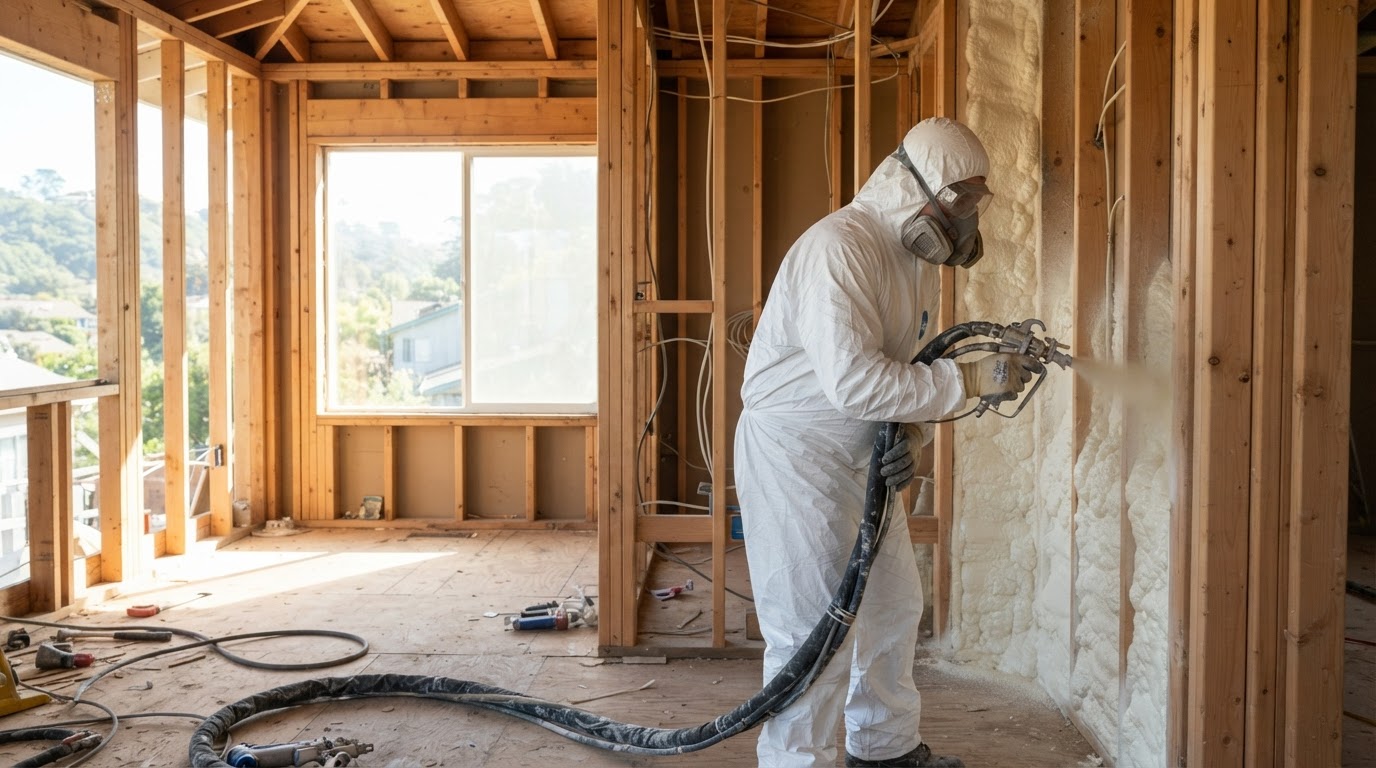
Request a Spray Foam Insulation Estimate
Tell us about your property and the insulation work you need. Include your project address so we can determine serviceability in Watsonville and the Central Coast. We review each request and reach out to discuss scope, materials, and next steps.
- Six-field request form — no unnecessary required fields
- SMS consent is optional and never required to request an estimate
- Project-specific pricing after scope evaluation
Request My Estimate
Request your free spray foam insulation estimate. 10+ Years of Experience • Insured.
Why Watsonville Property Owners Choose Watsonville Spray Foam Insulation
10+ Years of Hands-On Experience
Watsonville Spray Foam Insulation works with service providers who have 10+ years of hands-on industry experience across residential, commercial, and specialty insulation scopes. Experience informs how we assess each assembly before recommending a material or thickness.
Insured Service
Watsonville Spray Foam Insulation is Insured. We state this plainly without inventing carrier names, policy numbers, or certificate details. Insurance is part of how we approach every project with accountability.
Assembly-Specific Foam Selection
Foam type, installed thickness, and placement are selected around your building conditions and project requirements, not a one-product-fits-all pitch. Open-cell and closed-cell spray polyurethane foam serve different assemblies and moisture strategies.
Clear Estimates and Project Planning
We provide transparent scope, material, access, preparation, and pricing-driver discussion so you understand what moves the estimate. Scheduling and next steps are included with the project scope, not buried in fine print.
Residential Spray Foam & Insulation Services in Watsonville
From existing homes and remodels to new construction, these residential insulation services address the attics, crawl spaces, walls, and air-sealing needs common to Watsonville and Pajaro Valley properties.
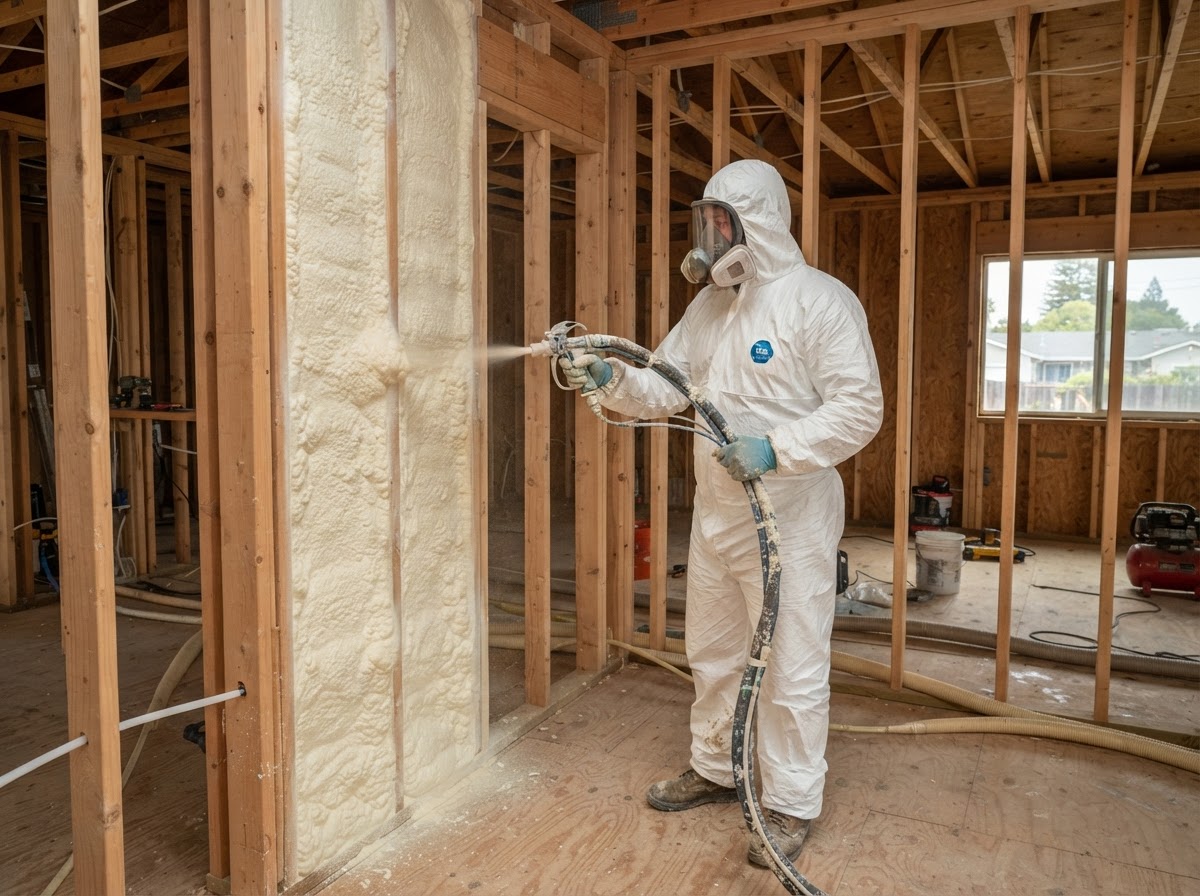
Residential Spray Foam Insulation
Residential spray foam insulation is applied to existing homes, remodels, and additions in Watsonville and the Pajaro Valley. Targeted air-sealing and thermal assemblies address the wall cavities, attics, and crawl spaces where uncontrolled air leakage and heat transfer affect comfort.
The work uses professional spray polyurethane foam equipment applied to prepared substrates and framing, with material selection based on the assembly, cavity depth, and project goals. Open-cell and closed-cell foam are chosen according to the building envelope strategy rather than interchangeably.
Property owners gain a continuous insulation and air-sealing layer that reduces uncontrolled air leakage when correctly specified and installed, supporting more consistent interior conditions without a guaranteed energy-savings percentage.
Learn more about Residential Spray Foam Insulation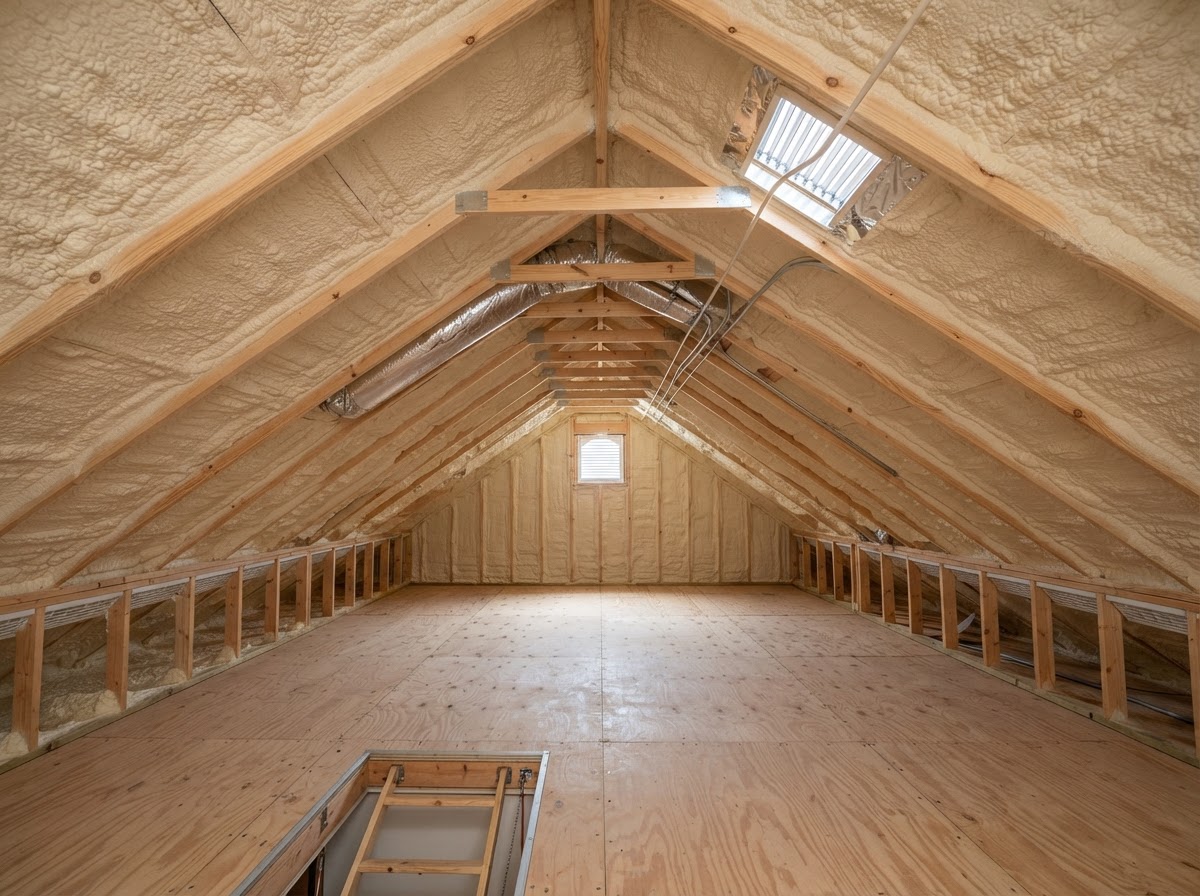
Attic Insulation
Attic insulation addresses attic floors and roof assemblies in Watsonville homes, depending on project design. Existing insulation condition, air leakage at the top of the building envelope, and ventilation strategy all factor into the scope.
Spray polyurethane foam is applied to the attic floor or the underside of the roof deck based on whether the design calls for a vented or unvented attic assembly. Roofing condition, moisture sources, and applicable code requirements are evaluated before material selection.
A properly specified attic assembly supports thermal continuity and air-sealing at a critical area of the building envelope, helping manage temperature and moisture conditions relevant to Central Coast homes.
Learn more about Attic Insulation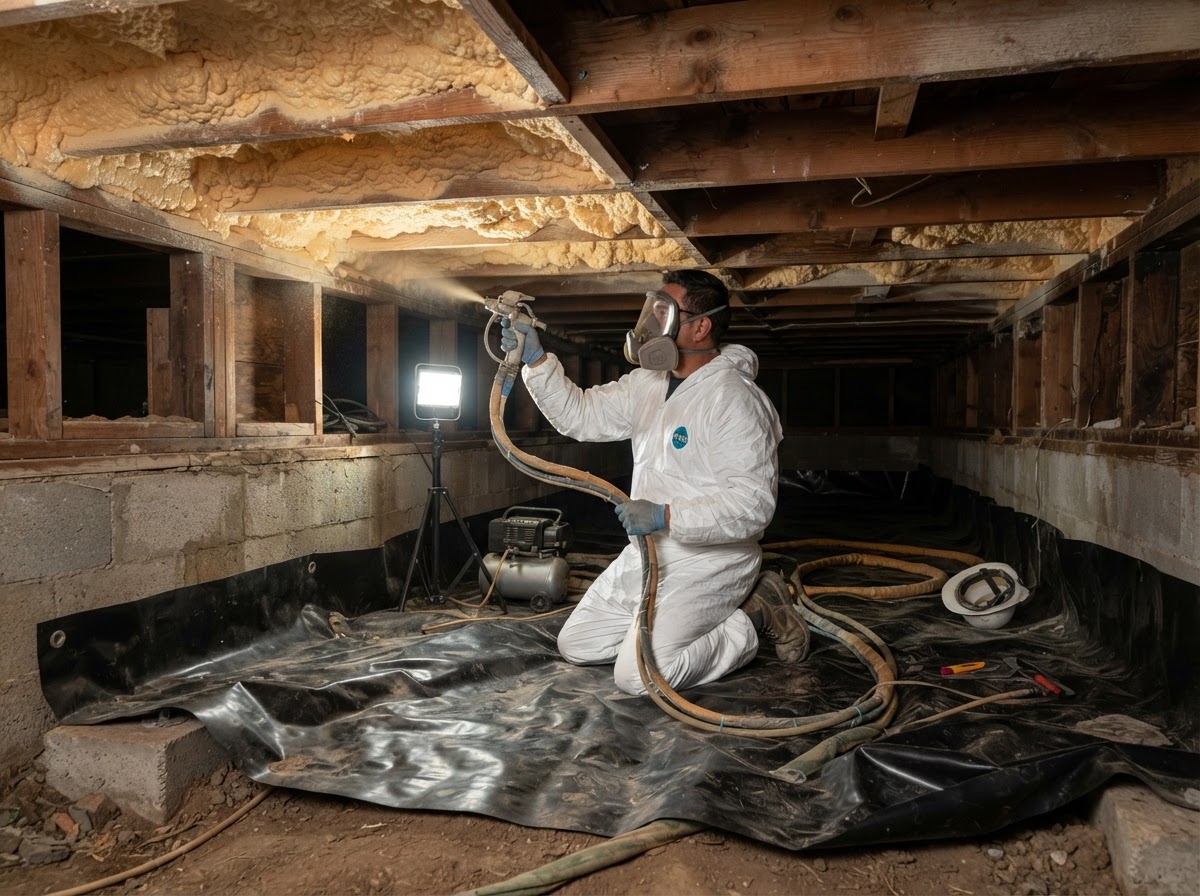
Crawl Space Insulation
Crawl space insulation addresses floor assemblies and perimeter framing beneath Watsonville homes. Access, moisture-source assessment, and the condition of existing insulation determine how the scope is approached.
Spray foam is applied to floor joists and perimeter areas where appropriate, with attention to substrate condition and the crawl space ventilation or conditioning strategy. Moisture sources are identified and addressed rather than concealed behind insulation.
Property owners gain insulation and air-sealing at a vulnerable part of the building envelope, helping manage floor temperature and reducing uncontrolled air movement from the crawl space into living areas.
Learn more about Crawl Space Insulation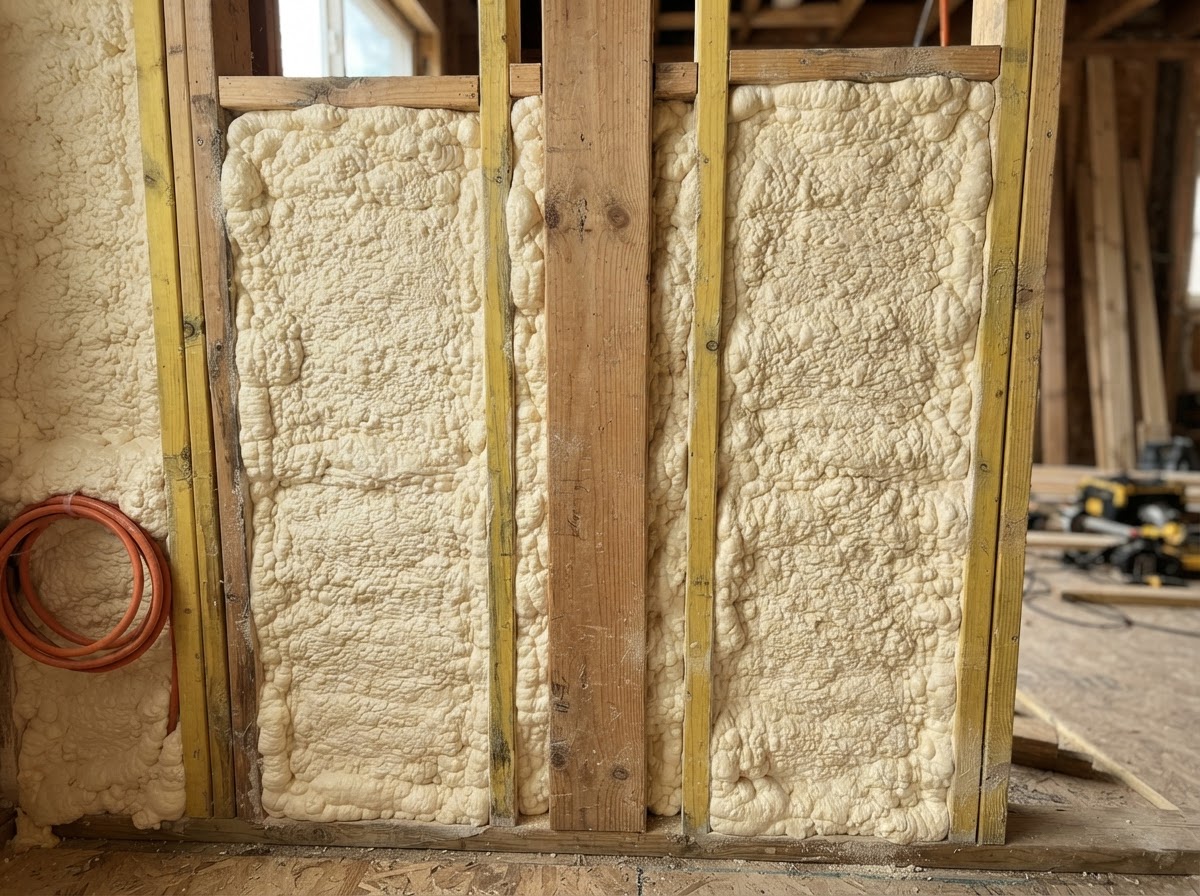
Wall Spray Foam Insulation
Wall spray foam insulation is applied to open framing in new construction, remodels, and addition projects in Watsonville. Not every closed wall can simply be filled, so access to the framing is a key factor in whether this approach fits your project.
Spray polyurethane foam is applied into wall cavities between studs, with material selection based on cavity depth, assembly requirements, and whether a thermal or ignition barrier applies. Consistent cavity coverage is part of the quality control process.
Property owners gain wall insulation that fills cavities and contributes to air-sealing at the building envelope, supporting thermal performance in the wall assembly when correctly specified and installed.
Learn more about Wall Spray Foam Insulation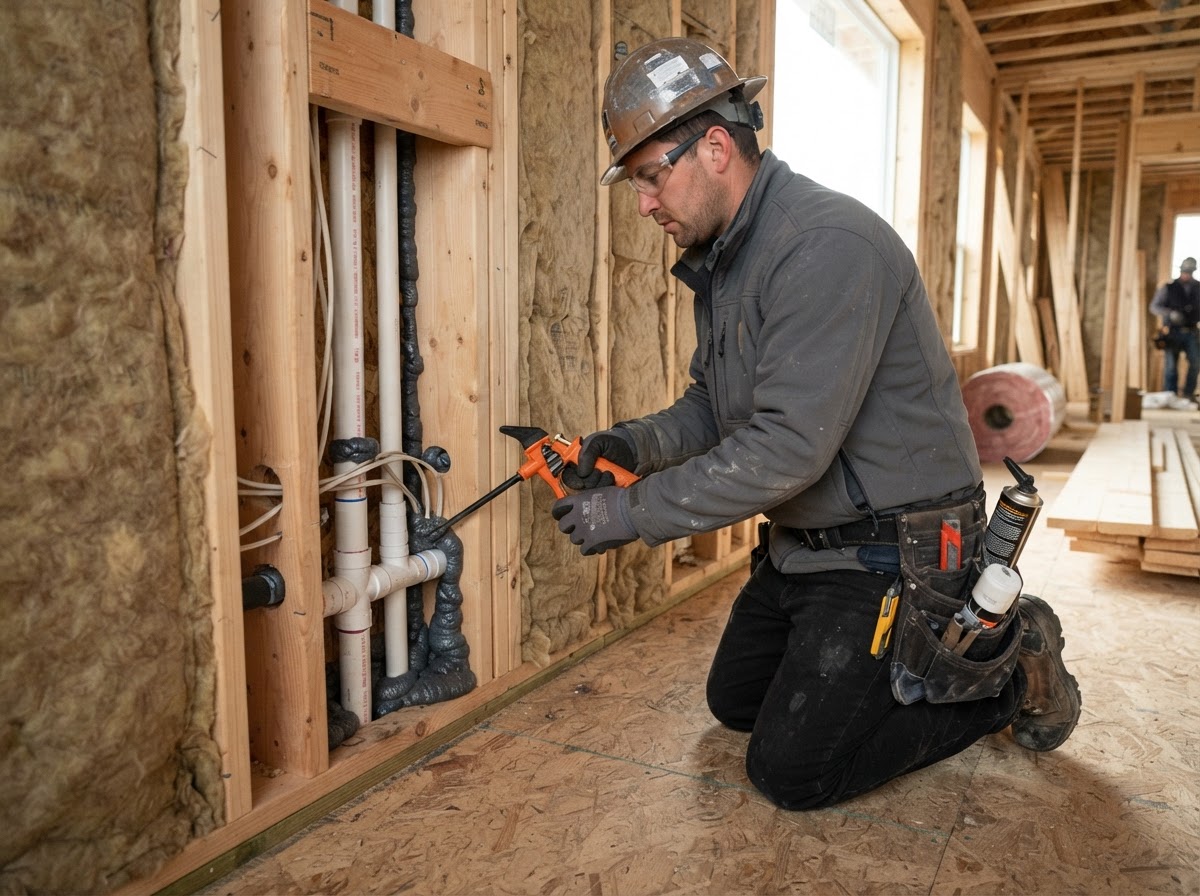
Air Sealing
Air sealing addresses uncontrolled gaps, penetrations, and leaks in the building envelope of Watsonville homes and buildings. It targets the connections between framing, sheathing, and mechanical penetrations where air leakage occurs.
The work uses professional sealing methods and materials applied to identified leakage points, including framing penetrations, rim and band areas, and junctions between assemblies. Air-sealing is coordinated with the overall insulation strategy rather than treated as a standalone fix.
Property owners gain a tighter building envelope that reduces uncontrolled air leakage when correctly executed, without a promised energy-savings percentage that depends on the entire building.
Learn more about Air Sealing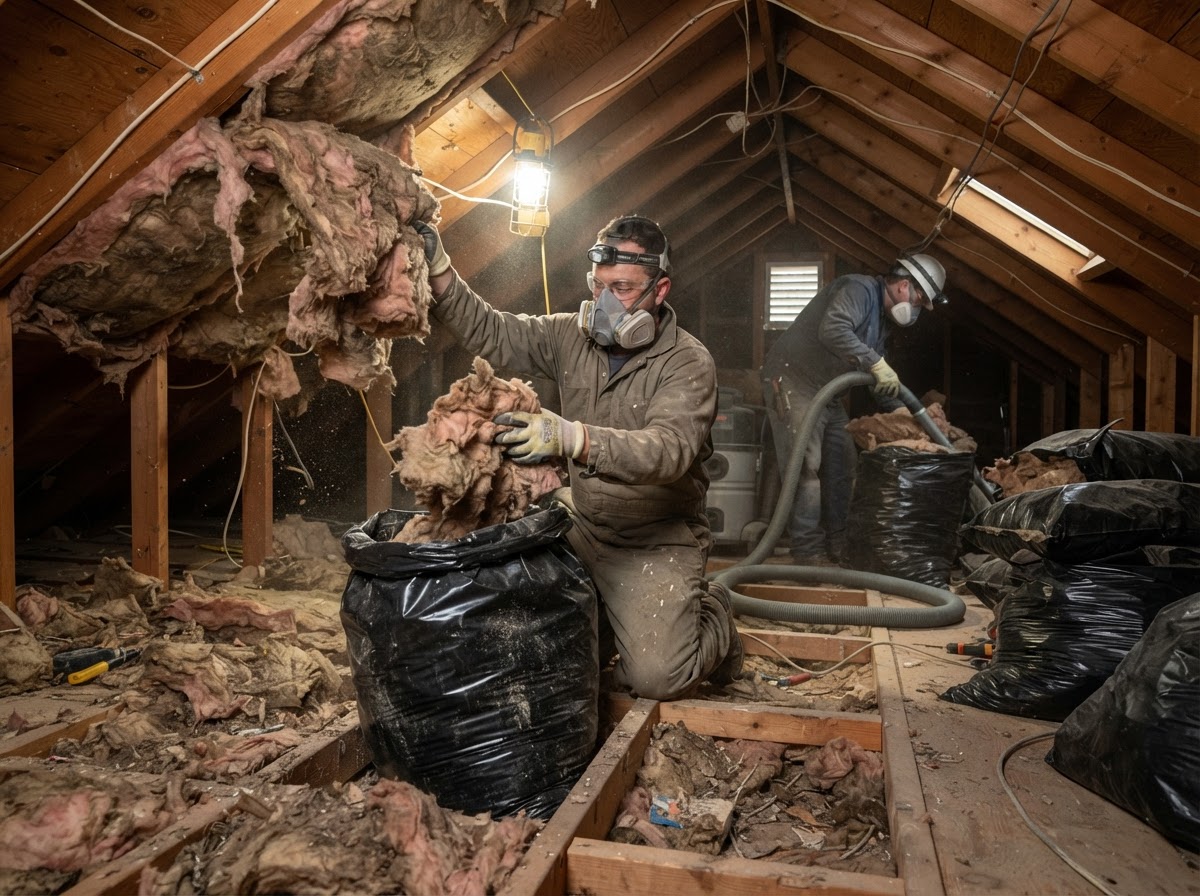
Insulation Removal
Insulation removal is performed when existing insulation is damaged, contaminated, wet, obstructive, or incompatible with the planned spray foam scope. Not every project requires removal, so the condition of existing insulation is assessed first.
Removal uses professional equipment and protective procedures to extract old insulation from attics, crawl spaces, or wall assemblies, preparing the substrate for the new installation. Contaminated or wet material is addressed as part of the scope.
Property owners gain a clean substrate and accurate access to the assembly, which supports proper spray foam adhesion and installation quality without old material interfering with the new insulation.
Learn more about Insulation Removal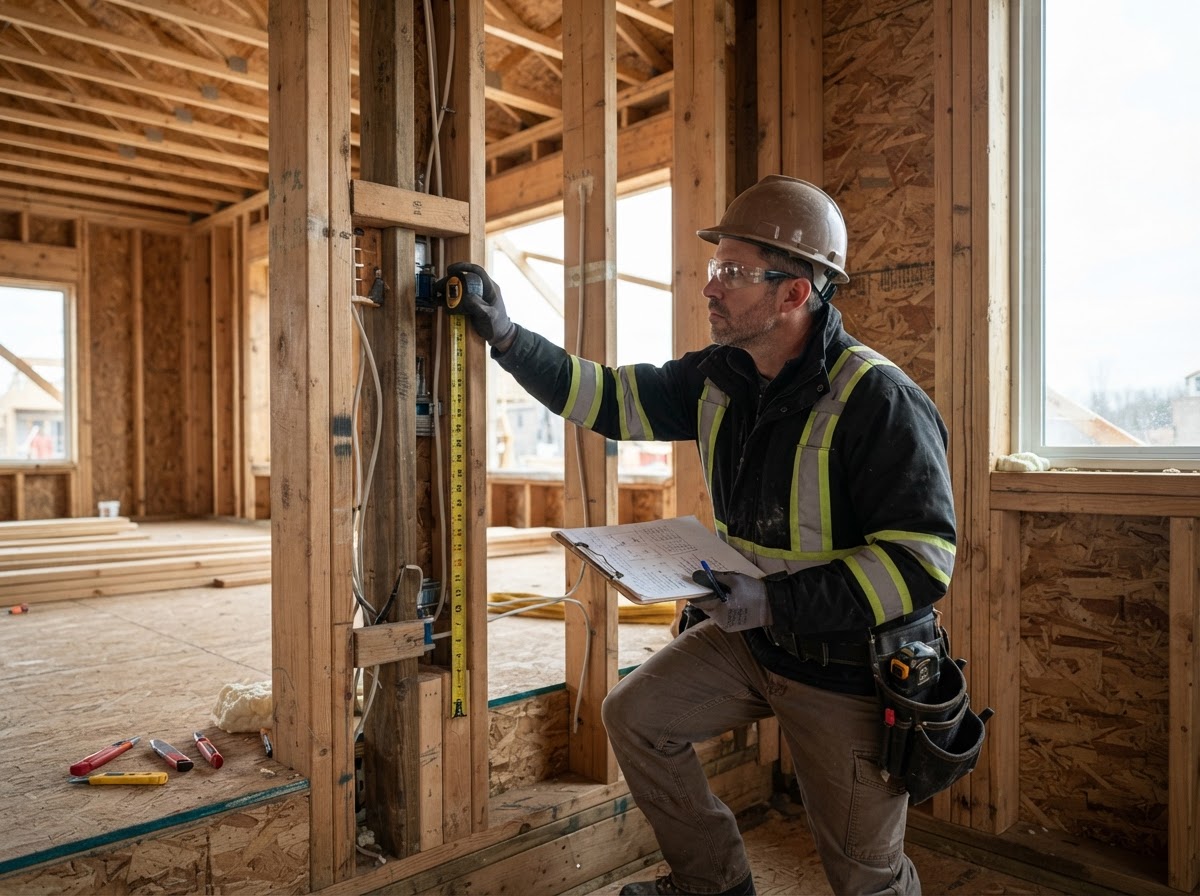
New Construction Spray Foam Insulation
New construction spray foam insulation is coordinated at the framing stage for homes and buildings under construction in Watsonville. Specified assemblies, inspection sequencing, and code requirements are part of planning the insulation scope.
Spray polyurethane foam is applied to open framing before finishes are installed, with material and thickness selected for each assembly — walls, roof decks, rim areas, and attic spaces. Coordination with the construction schedule and applicable inspections is built into the process.
Property owners gain insulation and air-sealing integrated into the building envelope during construction, avoiding the access limitations of retrofit work and supporting assembly compliance from the start.
Learn more about New Construction Spray Foam InsulationCommercial, Agricultural & Specialty Spray Foam Services in Watsonville
These services address the commercial, agricultural, metal-building, and specialty assemblies found across the Watsonville area and the broader Central Coast.
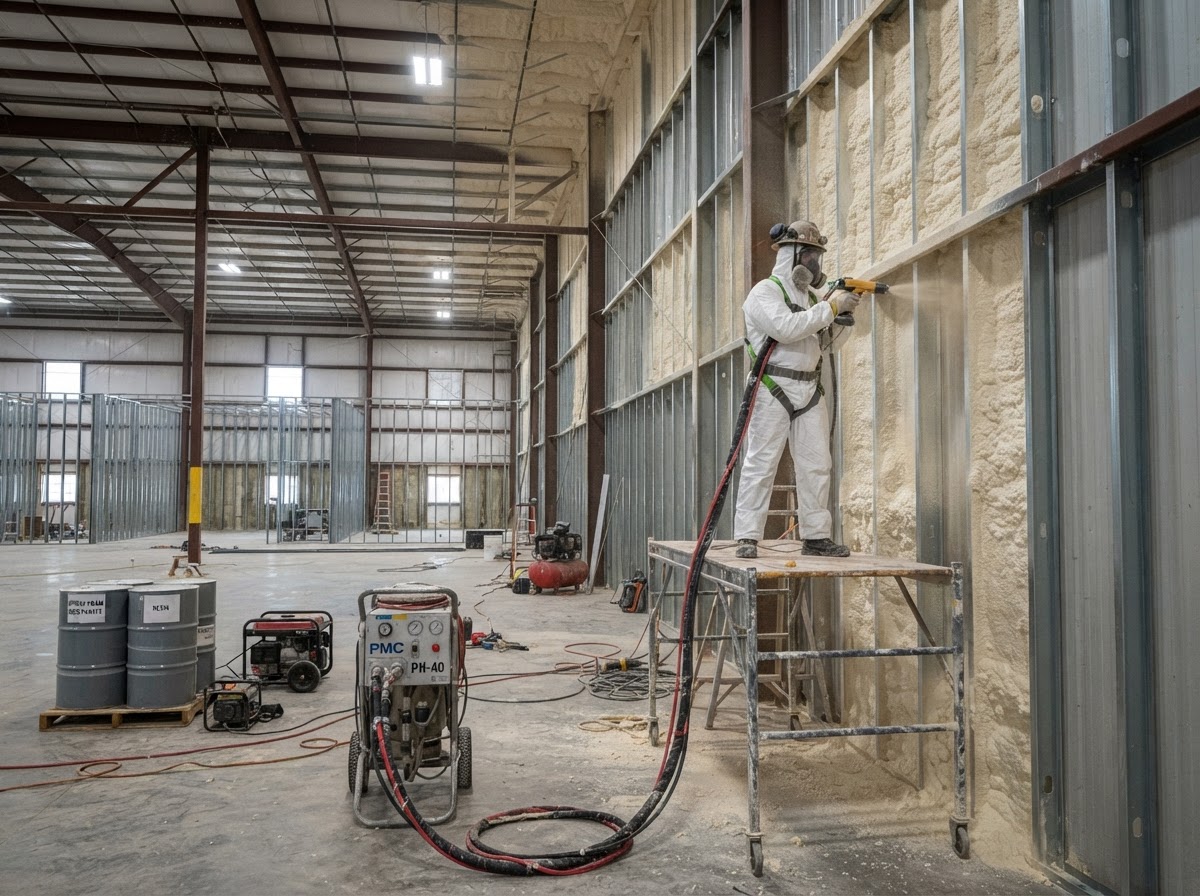
Commercial Spray Foam Insulation
Commercial spray foam insulation is applied to work areas, storage and light-commercial buildings, and tenant improvement projects in the Watsonville area. The scope depends on the building type, occupancy, and assembly requirements.
Professional spray polyurethane foam equipment is used to insulate walls, roof decks, and perimeter assemblies, with material selection based on the commercial assembly, code requirements, and access conditions. Site preparation and scheduling are coordinated around building use.
Property owners gain insulation and air-sealing for commercial assemblies that supports thermal performance and condensation control, without implying any specific customer relationship or completed project.
Learn more about Commercial Spray Foam Insulation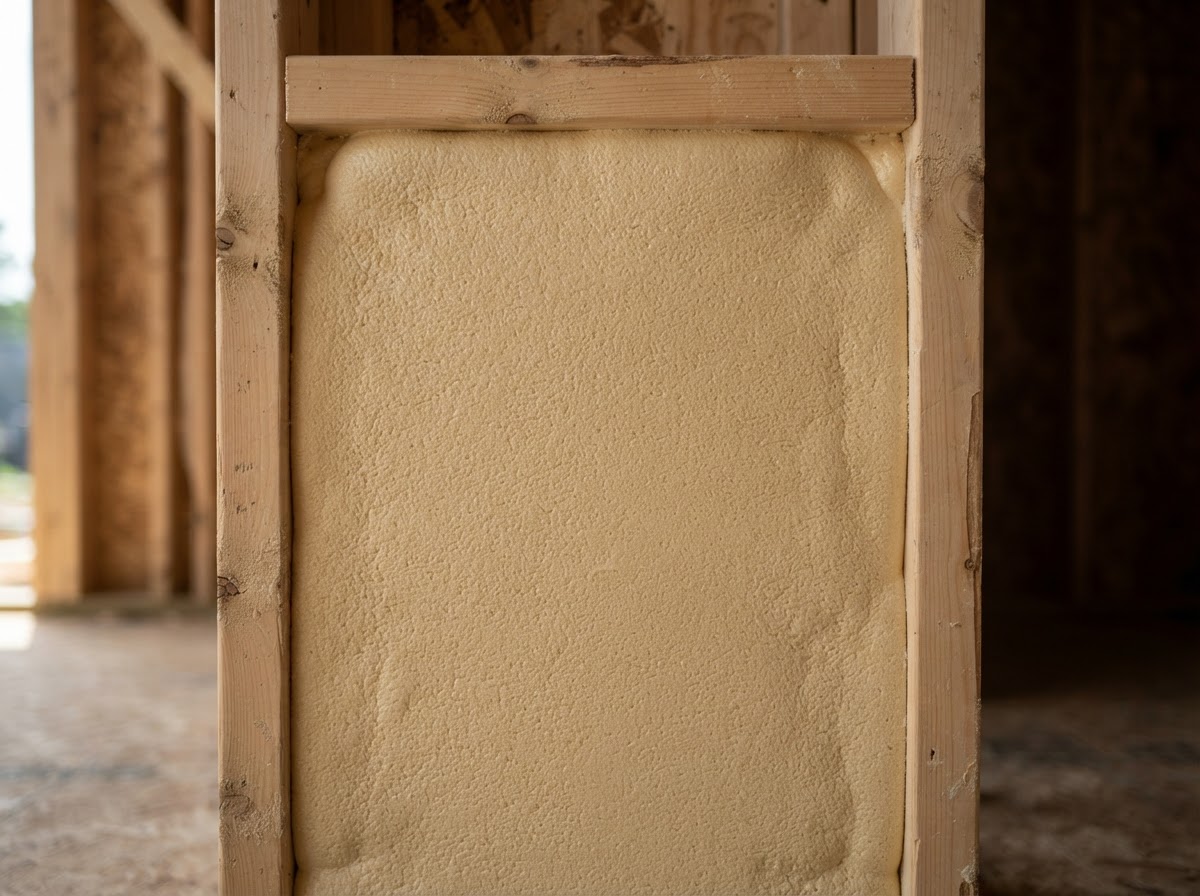
Closed-Cell Spray Foam Insulation
Closed-cell spray foam is a medium-density spray polyurethane foam used in Watsonville assemblies where higher density and higher modeled R-value per inch are relevant. It is selected based on assembly, moisture strategy, and project requirements.
Closed-cell foam is applied with professional equipment to prepared substrates, with installed thickness determined by the assembly and product documentation. Its vapor characteristics are assembly-dependent and should not be treated as an automatic vapor barrier.
Property owners gain a dense insulation layer with higher modeled R-value per inch than open-cell foam, supporting thermal and moisture-management goals when correctly specified for the assembly.
Learn more about Closed-Cell Spray Foam Insulation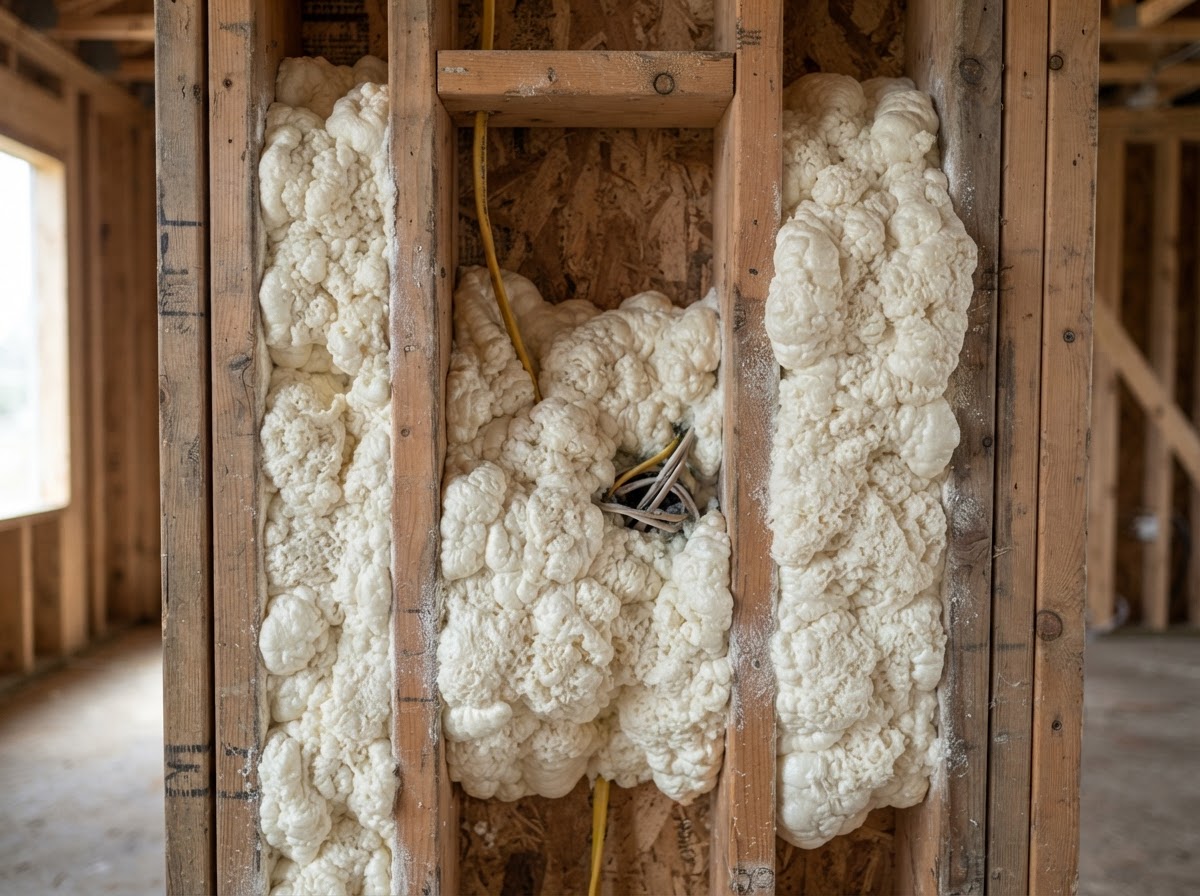
Open-Cell Spray Foam Insulation
Open-cell spray foam is a lower-density spray polyurethane foam that expands into cavities, used in Watsonville assemblies where air-sealing and cavity fill are the primary goals. It is selected based on assembly depth, project requirements, and product-specific performance.
Open-cell foam is applied with professional equipment to open framing, expanding to fill cavities and provide an air-sealing layer. Its lower density and vapor permeance characteristics make it appropriate for specific assemblies where breathability is part of the strategy.
Property owners gain cavity-filling insulation and air-sealing that reduces uncontrolled air leakage, with product-specific performance documented by the manufacturer rather than assumed.
Learn more about Open-Cell Spray Foam Insulation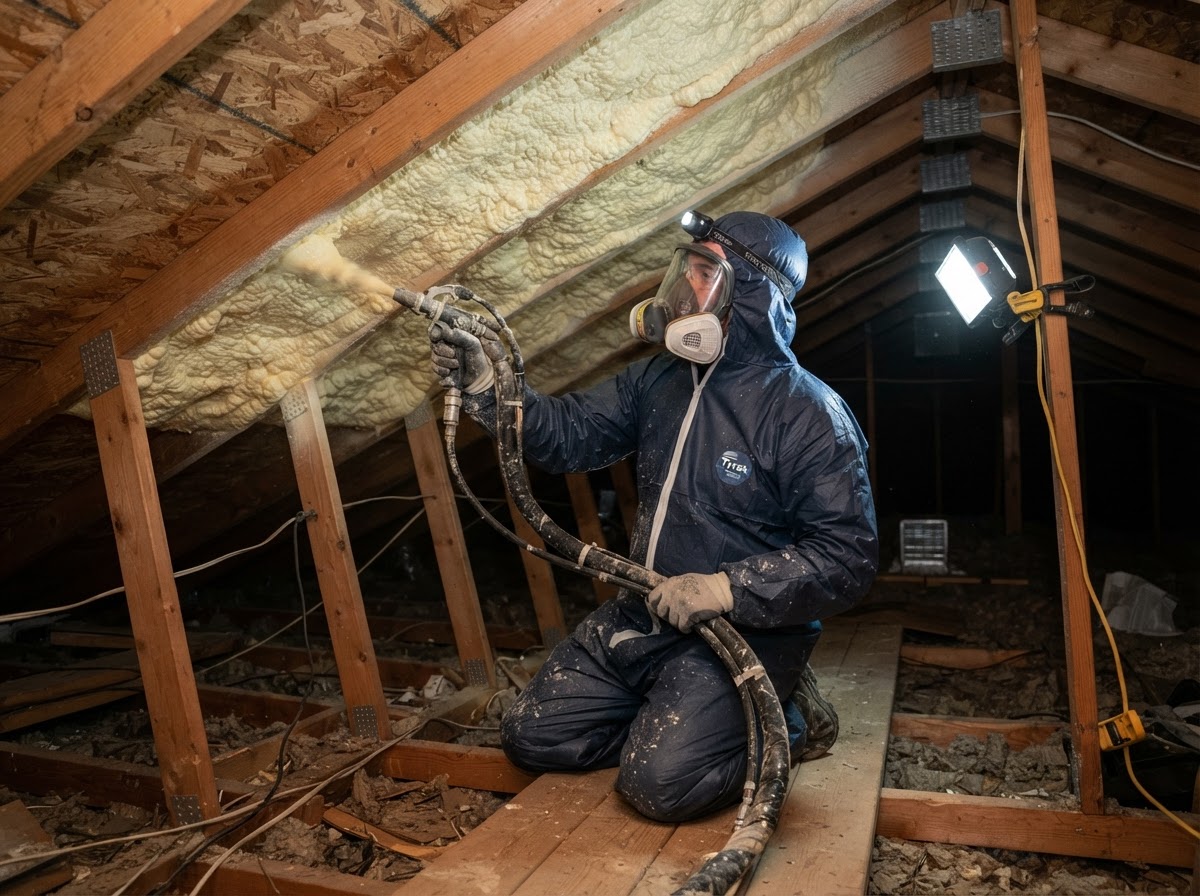
Roof Deck Spray Foam Insulation
Roof deck spray foam insulation is applied to the underside of roof decks in Watsonville homes and buildings. These assemblies require attention to roofing condition, moisture strategy, and whether a vented or unvented roof assembly applies.
Spray polyurethane foam is applied to the roof deck substrate with material and thickness selected for the assembly, ventilation or unvented-assembly requirements, and applicable code. Roofing condition and active leaks are evaluated before insulation proceeds.
Property owners gain insulation at the roof deck that supports thermal continuity and air-sealing for the assembly, with moisture and ventilation strategy addressed as part of the scope rather than ignored.
Learn more about Roof Deck Spray Foam Insulation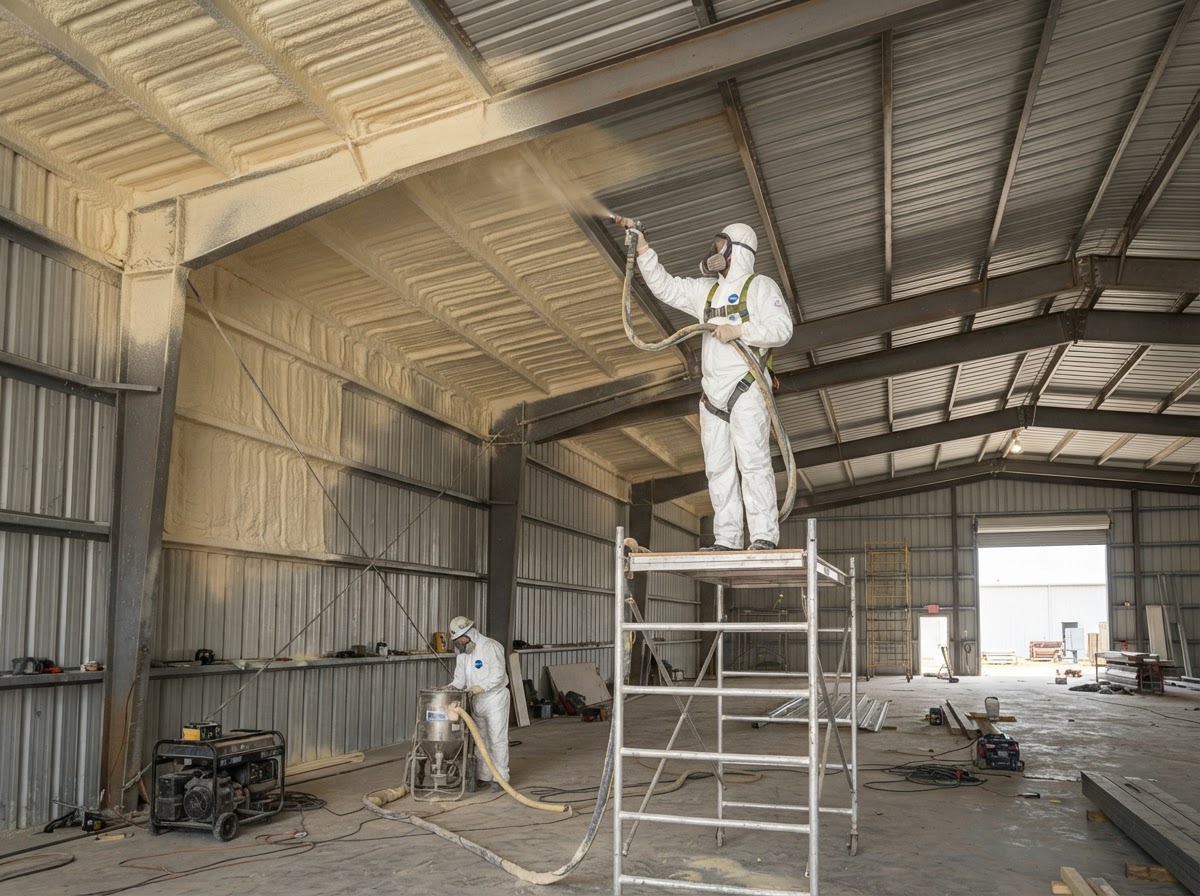
Metal Building Spray Foam Insulation
Metal building spray foam insulation is applied to the interior of steel-panel buildings in the Watsonville area. Condensation control, thermal bridging context, and access to the building interior are key factors in the scope.
Spray polyurethane foam is applied to interior steel panels and framing with professional equipment, creating an insulation and condensation-control layer. Material selection accounts for the metal substrate, building use, and applicable code requirements.
Property owners gain insulation that helps manage condensation on metal panels and supports interior temperature control, relevant to storage, light-commercial, and agricultural metal structures.
Learn more about Metal Building Spray Foam Insulation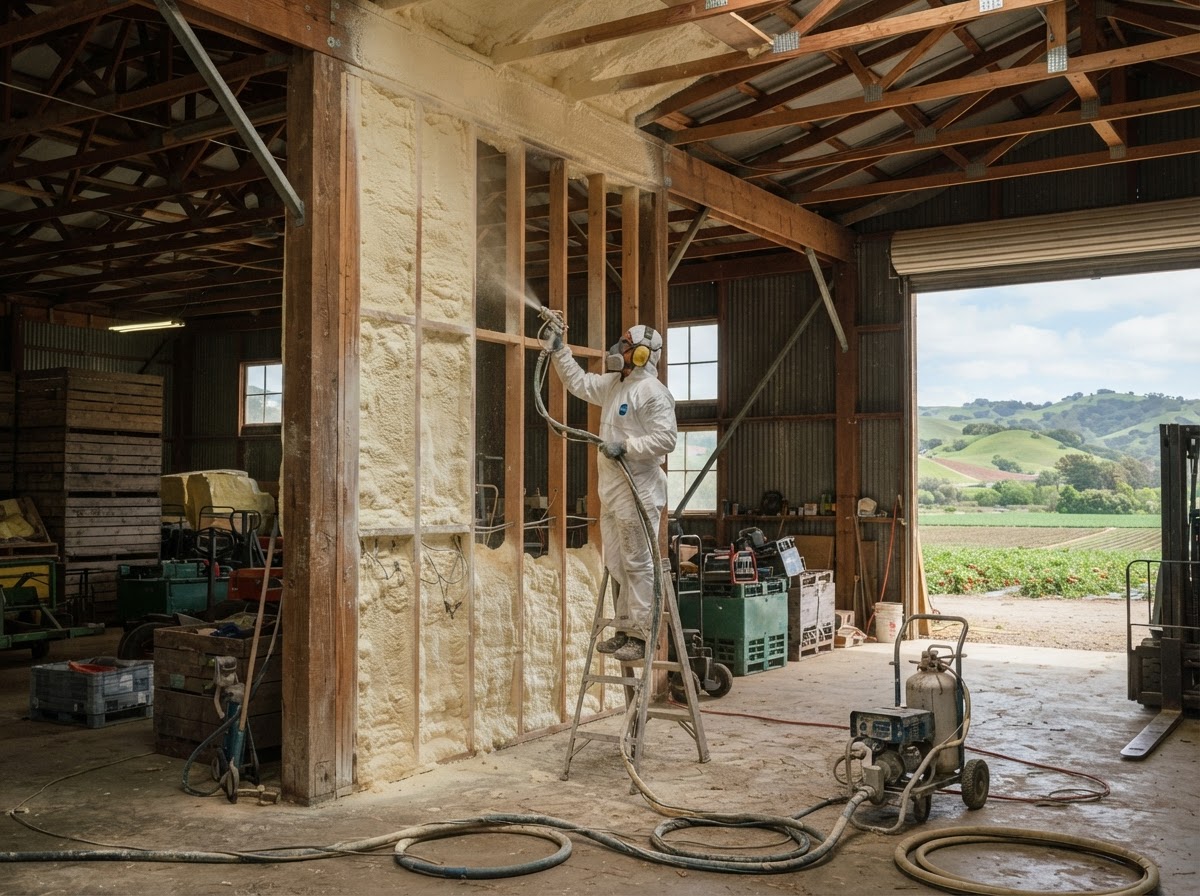
Agricultural Building Spray Foam Insulation
Agricultural building spray foam insulation serves the barns, storage structures, and agricultural buildings common to the Pajaro Valley and Watsonville area. Not every agricultural structure is suitable, so the building and its use are assessed first.
Spray polyurethane foam is applied to the building framing and panels with professional equipment, with material selection based on the structure type, intended use, and moisture or temperature requirements. Access and substrate condition are part of the evaluation.
Property owners gain insulation that supports temperature and moisture management for agricultural structures, relevant to storage conditions and building performance in the Pajaro Valley context.
Learn more about Agricultural Building Spray Foam InsulationHow Our Spray Foam Insulation Process Works
Property and Assembly Assessment
We assess the areas being insulated, current insulation condition, leaks or moisture indicators, accessibility, and your project goals. This informs material and scope recommendations. We do not perform engineering or code-plan services unless verified.
Scope, Material Selection and Estimate
We clarify the open-cell versus closed-cell choice, area, installed thickness, preparation, removal, barrier requirements, and access as relevant. The estimate reflects these drivers so you understand what moves the price.
Job-Site Preparation and Occupant Planning
Preparation includes isolating and protecting the work area, securing access, and coordinating occupants and pets. Product-specific ventilation and re-entry planning follows manufacturer requirements, not a universal hour count.
Professional Spray Foam Installation
Professional application covers the substrate and assembly with spray polyurethane foam, using passes and lifts where product-specific, with cavity and assembly coverage as part of quality control. We do not publish equipment settings or chemical-mixing steps.
Quality Check, Cleanup and Ventilation
We review visual coverage and assembly condition, clean the work area, and follow manufacturer-specific curing and ventilation procedures. Re-entry and re-occupancy follow product documentation, not a generic safe-after-X-hours claim.
Final Walkthrough and Next Steps
We walk through the completed scope with you and discuss any subsequent barrier, finish, or inspection coordination applicable to the project. Next steps are clear before we leave the site.
Last updated: September 8, 2026
How Much Does Spray Foam Insulation Cost in Watsonville?
Spray foam insulation in Watsonville is commonly priced by board foot, with the total depending on foam type, installed thickness, square footage, access, preparation, and the building assembly. One board foot equals one square foot of coverage at one inch thick.
Open-Cell Spray Foam Pricing
Open-cell spray foam: approximately $0.60–$1.60 per board foot
Notes: planning range only; actual pricing depends on product, thickness, total area, access, prep, and job complexity.
Closed-Cell Spray Foam Pricing
Closed-cell spray foam: approximately $1.30–$3.10 per board foot
Notes: planning range only; higher density and project-specific installed thickness influence material and labor requirements.
What Changes the Final Estimate?
- • Foam type (open-cell vs. closed-cell)
- • Specified installed thickness
- • Square footage of the area
- • Framing and assembly type
- • Attic or crawl-space access
- • Substrate condition
- • Removal of existing insulation
- • Masking and site preparation
- • Lift and application requirements
- • Ignition or thermal barrier needs
- • Ventilation and re-entry planning
- • Commercial access and equipment
- • Project size and complexity
These ranges are planning tools, not fixed quotes. Site conditions, foam type, installed thickness, access, prep or removal, and code or assembly requirements can all affect price. We never convert a generic range into a fake whole-house total.
Get a Project-Specific Estimate
Submit your request with your project address and the service you need. We review the scope and provide project-specific pricing after evaluation — not a generic number from a range. Call 831-432-7982 for an immediate conversation.
Request My Estimate
Request your free spray foam insulation estimate. 10+ Years of Experience • Insured.
Open-Cell vs. Closed-Cell Spray Foam in Watsonville
Open-Cell Spray Foam
Open-cell spray polyurethane foam is a lower-density material. California Energy Commission modeling defaults include approximately R-3.6 per inch for low-density open-cell SPF. Actual product values vary, and manufacturer product data controls.
Its expansion into cavities makes it useful for air-sealing and cavity fill. Vapor permeance characteristics differ from closed-cell foam and factor into assembly selection.
Closed-Cell Spray Foam
Closed-cell spray polyurethane foam is a medium-density material. California Energy Commission modeling defaults include approximately R-5.8 per inch for medium-density closed-cell SPF. Actual product values vary, and manufacturer product data controls.
Its higher density and modeled R-value per inch suit assemblies where space is limited or where different vapor characteristics are relevant. Vapor-retarder behavior depends on thickness, product properties, and assembly.
Where Each Material Fits
Cavity depth, assembly type, moisture and vapor strategy, project goals, and local or code and product requirements determine which foam fits. Neither material is universally better — the correct choice depends on the building, not a default preference.
Why Building-Assembly Requirements Matter
Thermal and ignition barrier requirements, moisture sources, roofing condition, inspections, and manufacturer listings all affect whether a given foam and assembly are appropriate. Assembly compliance depends on the actual product, application, and applicable code.
Spray Foam Insulation for Watsonville Homes and Buildings
Watsonville sits in the Pajaro Valley along the Highway 1 corridor in Santa Cruz County, a Central Coast community where residential neighborhoods, agricultural operations, and light-commercial properties share the same coastal climate. That mix shapes the insulation needs we see: existing homes with older attic and crawl-space insulation, agricultural and storage buildings requiring condensation control, and new construction where framing-stage coordination matters.
Coastal and Central Coast moisture and temperature conditions affect building envelopes differently than inland areas. Attics, crawl spaces, wall assemblies, roof decks, and metal buildings each respond to humidity and temperature swings in ways that influence foam selection, thickness, and moisture strategy. We assess moisture sources and substrate condition before recommending an assembly, because spray foam does not repair active roof or plumbing leaks or make unresolved moisture problems disappear.
For Watsonville properties, the practical questions are usually about which assembly fits, whether existing insulation should be removed, and what code or permit requirements apply. The Watsonville Building Division is the local authority for building permits and inspections within city jurisdiction, and California's 2025 building and energy standards apply to permit applications beginning January 1, 2026, subject to the actual project and local requirements. We approach each project with awareness of these factors rather than a one-size-fits-all recommendation.
Whether the project is a residential remodel in an older Watsonville home, a metal building on an agricultural property in the Pajaro Valley, or new construction coordinated with the framing schedule, the goal is the same: an assembly-specific insulation scope built on real materials, real processes, and honest assessment of the building. Call 831-432-7982 to discuss your property.
Spray Foam Insulation FAQs — Watsonville, CA
How much does spray foam insulation cost in Watsonville?
Spray foam insulation in Watsonville is commonly priced by board foot. Open-cell spray foam runs approximately $0.60–$1.60 per board foot, and closed-cell spray foam runs approximately $1.30–$3.10 per board foot as planning ranges. Actual project price depends on foam type, installed thickness, square footage, access, removal or prep, barriers, and project conditions.
What is a board foot of spray foam insulation?
One board foot of spray foam insulation is one square foot of coverage installed one inch thick. For example, 100 square feet of area insulated two inches thick equals 200 board feet. This unit helps compare material quantities across projects.
Is open-cell or closed-cell spray foam better for Watsonville homes?
Neither open-cell nor closed-cell spray foam is universally better. The correct choice depends on the assembly, cavity depth, moisture and vapor strategy, project goals, and applicable code or product requirements. We select the material based on your building conditions, not a default preference.
What R-value does spray foam insulation provide?
California Energy Commission modeling defaults include approximately R-3.6 per inch for low-density open-cell spray polyurethane foam and approximately R-5.8 per inch for medium-density closed-cell spray polyurethane foam. Actual product values vary, and manufacturer product data controls for the specific material installed.
Can spray foam help reduce air leakage?
Yes, correctly installed spray polyurethane foam can form an effective air-sealing layer that reduces uncontrolled air leakage in the building envelope. Actual energy performance varies by the entire building, and we never promise a specific energy-savings percentage.
Does spray foam insulation require a permit in Watsonville?
Permit requirements depend on project scope. The Watsonville Building Division is the local authority for building permits and inspections within Watsonville jurisdiction, so requirements should be confirmed for the actual project before covered work proceeds.
Is spray foam insulation a vapor barrier?
Spray foam insulation is not automatically a vapor barrier. Vapor performance depends on foam type, installed thickness, tested product properties, and the assembly. We do not make absolute vapor-barrier claims without evaluating the specific product and application.
Does spray foam need a thermal or ignition barrier?
Some spray foam applications do require a thermal or ignition barrier. The requirement depends on where the foam is installed, occupancy and access, the listed product or system, and applicable building code. We address barrier requirements as part of the scope discussion.
Can people stay inside during spray foam installation?
Unprotected occupants should not remain in the application area during professional spray polyurethane foam installation. Re-entry and re-occupancy follow product-specific manufacturer instructions and job-site ventilation requirements, not a universal safe-after-X-hours number.
How long does spray foam insulation take to install?
There is no universal installation duration. Project duration depends on area, preparation, removal, accessibility, installed thickness, building type, and ventilation or re-entry requirements. We provide a schedule with the project scope rather than inventing a generic timeframe.
Does existing insulation always have to be removed?
No, existing insulation does not always need to be removed. Removal depends on the condition of the old insulation, moisture or contamination, access, the target assembly, and project scope. We assess existing insulation before recommending removal.
Can spray foam fix an active roof or plumbing leak?
No, spray foam cannot fix an active roof or plumbing leak. Active water sources must be diagnosed and addressed rather than concealed behind insulation. We evaluate moisture sources before proceeding with any insulation scope.
What types of buildings do you insulate in Watsonville?
Watsonville Spray Foam Insulation insulates residential, commercial, agricultural, metal-building, and appropriate new-construction and remodel assemblies in Watsonville and the Central Coast. The building type and assembly determine the material and scope.
How do I request a spray foam insulation estimate?
You request a spray foam insulation estimate by calling 831-432-7982 or by submitting the five-field form on this page with your Full Name, Phone Number, Email, project Address, and Service Request. We review each request and reach out to discuss scope and next steps.
Request a Spray Foam Insulation Estimate in Watsonville
Call 831-432-7982 to talk through your project, or submit the form below with your project address and service request. 10+ Years of Experience and Insured, serving Watsonville and the Central Coast.
Request My Estimate
Request your free spray foam insulation estimate. 10+ Years of Experience • Insured.