Attic Insulation in Watsonville, CA
Watsonville Spray Foam Insulation provides attic insulation and air-sealing services for appropriate attic-floor and roof-deck assemblies in Watsonville homes and buildings. We bring 10+ Years of Experience and are Insured, serving Watsonville, the Pajaro Valley, and the Central Coast.
Attic-floor insulation and roof-deck spray foam are different strategies and should not be treated as interchangeable. Attic-floor insulation addresses the ceiling plane, while roof-deck spray foam creates an unvented attic assembly. The correct approach depends on existing insulation condition, roof leaks, moisture, penetrations, access, ventilation strategy, and thermal or ignition-barrier requirements where applicable.
Each attic project starts with an access and existing-condition review that looks at air leakage, existing insulation, moisture sources, and roofing condition before any material is recommended. The fastest way to begin is a call to 831-432-7982, or you can submit the five-field form on this page with your project address.
Request an Attic Insulation Estimate
Tell us about your property and the insulation work you need. Include your project address so we can determine serviceability in Watsonville and the Central Coast. We review each request and reach out to discuss scope, materials, and next steps.
- Five-field request form — no unnecessary fields
- SMS consent is optional and never required to request an estimate
- Project-specific pricing after scope evaluation
Request My Estimate
Request your free spray foam insulation estimate. 10+ Years of Experience • Insured.
Why Watsonville Property Owners Choose Watsonville Spray Foam Insulation for Attic Insulation
Watsonville Spray Foam Insulation brings 10+ Years of Experience and is Insured, serving Watsonville, the Pajaro Valley, and the Central Coast with assembly-specific spray foam and insulation work.
Our Attic Insulation Services
Attic Air Sealing
Attic air sealing addresses leakage paths at penetrations, top plates, recessed fixtures, and ductwork where uncontrolled air moves between the attic and living space. It targets the connections between framing and the ceiling plane.
Professional sealing methods and materials are applied to identified leakage points, coordinated with the overall insulation strategy. We do not provide DIY sealing procedures, and air-sealing is evaluated as part of the attic scope rather than a standalone fix.
Property owners gain a tighter ceiling plane that reduces uncontrolled air leakage when correctly executed, without a promised energy-savings percentage that depends on the entire building.
Attic-Floor Insulation Projects
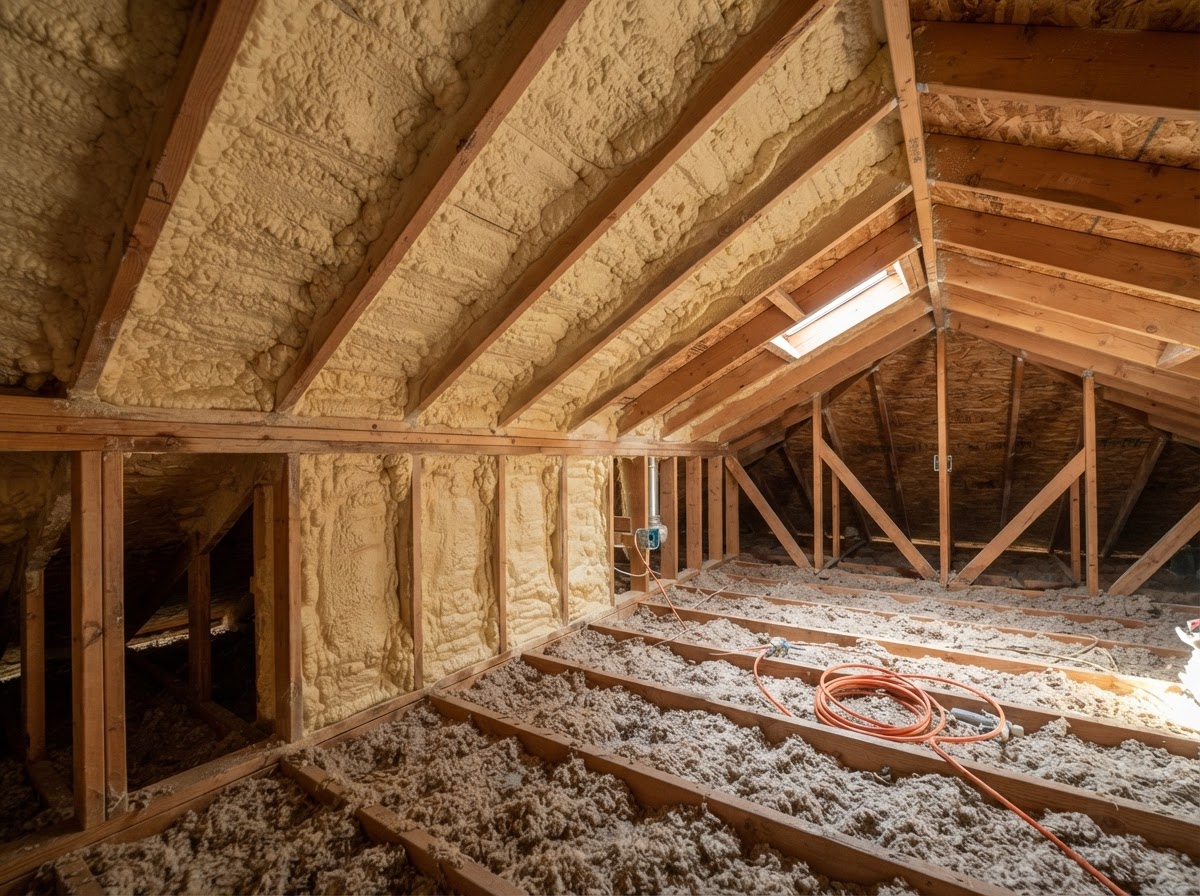
Attic-floor insulation addresses the ceiling plane in Watsonville homes where a vented attic strategy applies. Existing insulation condition, air leakage, and access determine how the scope is approached.
Spray polyurethane foam or appropriate insulation is applied to the attic floor based on the assembly and project goals, with material selection based on cavity depth and code requirements. Existing insulation may stay, be supplemented, or require removal depending on condition.
Property owners gain thermal continuity at the ceiling plane, helping manage temperature and air movement between the attic and living space.
Roof-Deck Spray Foam
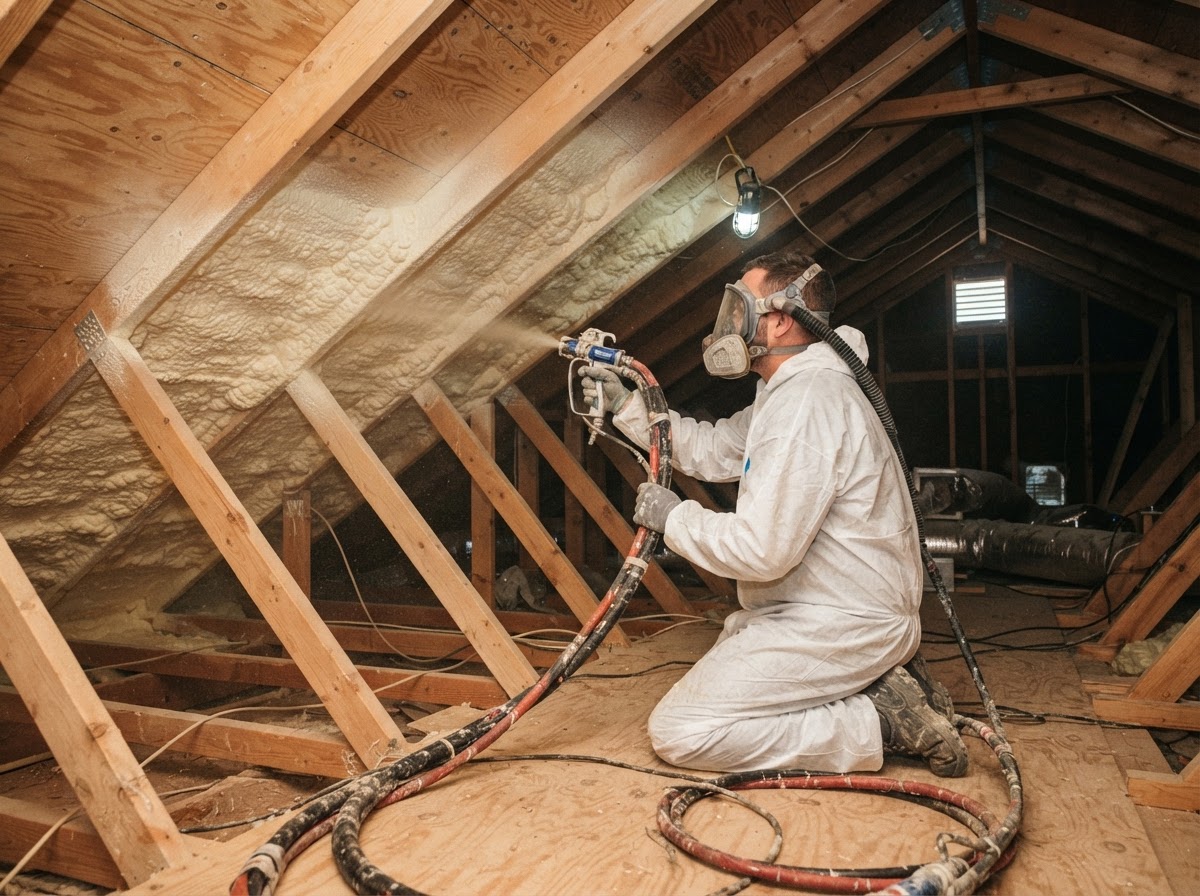
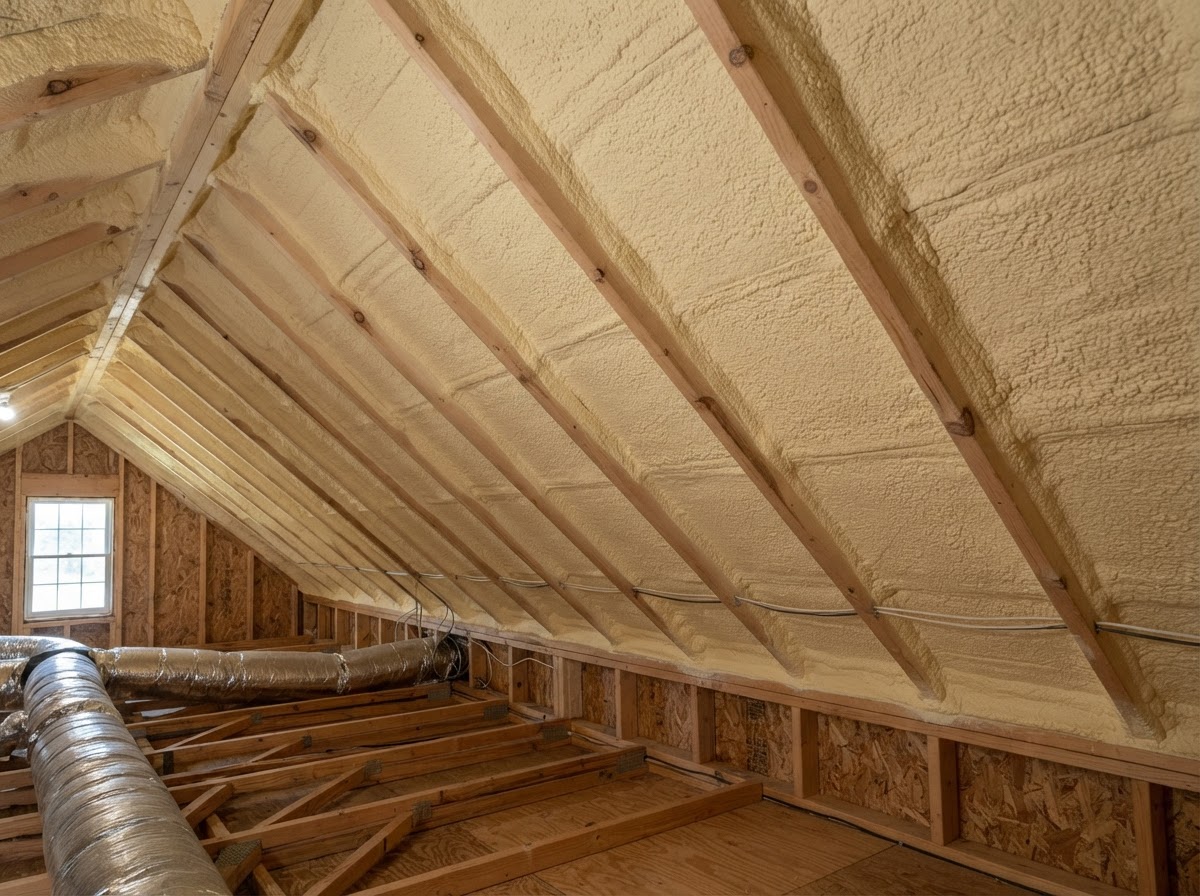
Roof-deck spray foam is applied to the underside of the roof deck and rafters to create an unvented attic assembly. These assemblies require attention to roofing condition, moisture strategy, and ventilation or unvented-assembly requirements per applicable code.
Spray polyurethane foam is applied to the roof-deck substrate with material and thickness selected for the assembly. Roofing condition and active leaks are evaluated before insulation proceeds, because spray foam does not repair active roof leaks.
Property owners gain insulation at the roof deck that supports thermal continuity and air-sealing for the assembly, with moisture and ventilation strategy addressed as part of the scope.
Existing Attic Insulation Evaluation and Removal
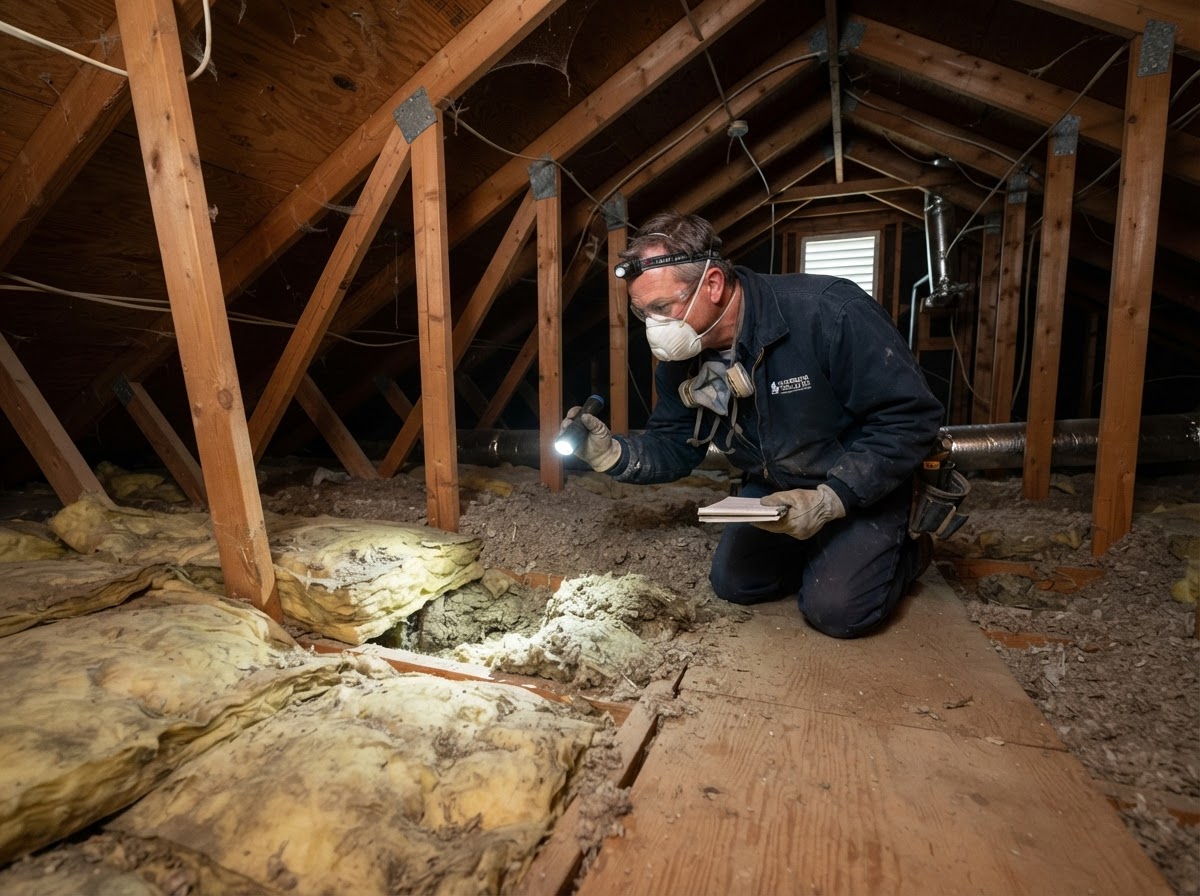
Existing attic insulation is evaluated to determine whether it may stay, be supplemented, or need removal. Dry, compatible, serviceable insulation may sometimes remain, while wet, contaminated, or obstructive material may require removal.
When removal is appropriate, professional equipment and protective procedures extract old insulation from the attic, preparing the substrate for the new installation. Removal is project-specific, not automatic, and is assessed before any recommendation.
Property owners gain a clean substrate and accurate access to the assembly, which supports proper installation quality without old material interfering with the new insulation.
What Problems Can Attic Insulation Address?
Air Leakage at the Ceiling Plane
Poor attic insulation performance often stems from air leakage at the ceiling plane — penetrations, top plates, and recessed fixtures. Air-sealing addresses these paths, but the source of the leak must be identified before prescribing material.
Incomplete or Disturbed Insulation
Attic insulation that is thin, disturbed, or incomplete leaves thermal gaps in the building envelope. Evaluation determines whether existing insulation can be supplemented or needs removal based on its condition and the planned assembly.
Moisture or Roof Problems That Must Be Corrected First
Moisture or roof problems must be corrected before attic insulation proceeds. Spray foam does not repair active roof leaks or make unresolved moisture problems disappear, and concealing a problem behind insulation does not fix it.
What Are the Signs a Watsonville Property May Need Attic Insulation?
Drafts and Temperature Differences
Drafts near the ceiling or temperature differences between rooms can indicate attic air leakage or under-insulation. An assessment identifies whether the issue is insulation, air leakage, or a separate moisture or roof problem.
Visibly Thin or Damaged Existing Insulation
Attic insulation that is visibly thin, compressed, wet, or contaminated may need evaluation, supplement, or removal. The condition of existing insulation is assessed first, because not every project requires removal.
Remodel or Roof-Assembly Changes
A remodel or roof-assembly change may create the opportunity to upgrade attic insulation while framing is accessible. Sequencing insulation with the construction schedule avoids the access limitations of retrofit work.
How Our Attic Insulation Process Works
Attic Access and Existing-Condition Review
We assess attic access, existing insulation condition, air leakage, moisture or roof problems, and your project goals. This informs whether the attic floor or roof deck is the correct strategy.
Insulation and Air-Sealing Plan
We clarify the attic-floor versus roof-deck choice, foam type, installed thickness, removal needs, barrier requirements, and ventilation strategy. The estimate reflects these drivers so you understand what moves the price.
Preparation and Occupant Planning
Preparation includes isolating and protecting the work area, securing attic access, and coordinating occupants and pets. Product-specific ventilation and re-entry planning follows manufacturer requirements, not a universal hour count.
Professional Installation
Professional application covers the substrate and assembly with spray polyurethane foam, using passes and lifts where product-specific, with cavity and assembly coverage as part of quality control.
Quality Review and Cleanup
We review visual coverage and assembly condition, clean the work area, and follow manufacturer-specific curing and ventilation procedures. Re-entry follows product documentation, not a generic safe-after-X-hours claim.
Last updated: September 8, 2026
How Much Does Attic Insulation Cost in Watsonville?
When spray foam is selected for attic insulation in Watsonville, it is commonly priced by board foot, with the total depending on foam type, installed thickness, square footage, access, preparation, and the building assembly. Attic scope may also include removal or prep, and no unsupported separate removal price is invented.
Open-Cell Spray Foam Pricing
Open-cell spray foam: approximately $0.60–$1.60 per board foot
Notes: planning range only; actual pricing depends on product, thickness, total area, access, prep, and job complexity.
Closed-Cell Spray Foam Pricing
Closed-cell spray foam: approximately $1.30–$3.10 per board foot
Notes: planning range only; higher density and project-specific installed thickness influence material and labor requirements.
What Changes the Final Estimate?
- • Attic access and height
- • Foam type (open-cell vs. closed-cell)
- • Specified installed thickness
- • Square footage of the area
- • Roof geometry and framing
- • Existing insulation condition
- • Removal or prep requirements
- • Ignition or thermal barrier needs
- • Ventilation or unvented-assembly plan
- • Project complexity
One board foot equals one square foot of coverage installed one inch thick. For example, 100 square feet at two inches thick equals 200 board feet.
These ranges are planning tools, not fixed quotes. Attic site conditions, foam type, installed thickness, access, prep or removal, and code or assembly requirements can all affect price. Removal pricing is project-specific and not invented as a separate unsupported range.
Get a Project-Specific Estimate
Submit your request with your project address and the service you need. We review the scope and provide project-specific pricing after evaluation — not a generic number from a range. Call 831-432-7982 for an immediate conversation.
Request My Estimate
Request your free spray foam insulation estimate. 10+ Years of Experience • Insured.
Attic Insulation FAQs for Watsonville
How much does attic spray foam insulation cost in Watsonville?
Attic spray foam in Watsonville is priced by board foot. Open-cell runs approximately $0.60–$1.60 per board foot, and closed-cell runs approximately $1.30–$3.10 per board foot as planning ranges. Attic scope may also include removal or prep, which is project-specific, and drivers include access, foam type, thickness, roof geometry, existing insulation, prep, barriers, and the ventilation plan.
Should spray foam go on the attic floor or roof deck?
Whether spray foam goes on the attic floor or roof deck depends on the assembly strategy. Attic-floor insulation addresses the ceiling plane in a vented attic, while roof-deck spray foam creates an unvented attic assembly. The correct choice depends on roofing condition, moisture strategy, ventilation, and code requirements.
Does old attic insulation need to be removed?
Old attic insulation does not always need to be removed. Removal depends on the condition of the old insulation, moisture or contamination, access, the target assembly, and project scope. Dry, compatible insulation may sometimes remain, while wet or contaminated material may require removal.
Can spray foam be installed under a leaking roof?
No, spray foam should not be installed under a leaking roof. Active roof leaks must be diagnosed and corrected rather than concealed by insulation. We evaluate roofing condition and moisture sources before proceeding with any attic insulation scope.
Does attic spray foam need an ignition or thermal barrier?
Some attic spray foam applications do require an ignition or thermal barrier. The requirement depends on where the foam is installed, occupancy and access, the listed product or system, and applicable building code. We address barrier requirements as part of the scope discussion.
Can people stay inside during attic spray foam installation?
Unprotected occupants should not remain in the application area during professional spray polyurethane foam installation. Re-entry and re-occupancy follow product-specific manufacturer instructions and job-site ventilation requirements, not a universal safe-after-X-hours number.
Request Attic Insulation in Watsonville
Call 831-432-7982 to talk through your project, or submit the form below with your project address and service request. 10+ Years of Experience and Insured, serving Watsonville and the Central Coast.
Request My Estimate
Request your free spray foam insulation estimate. 10+ Years of Experience • Insured.
Serving Watsonville & the Central Coast